
A Field Guide to Unrestored Wurlitzer Electronic Pianos
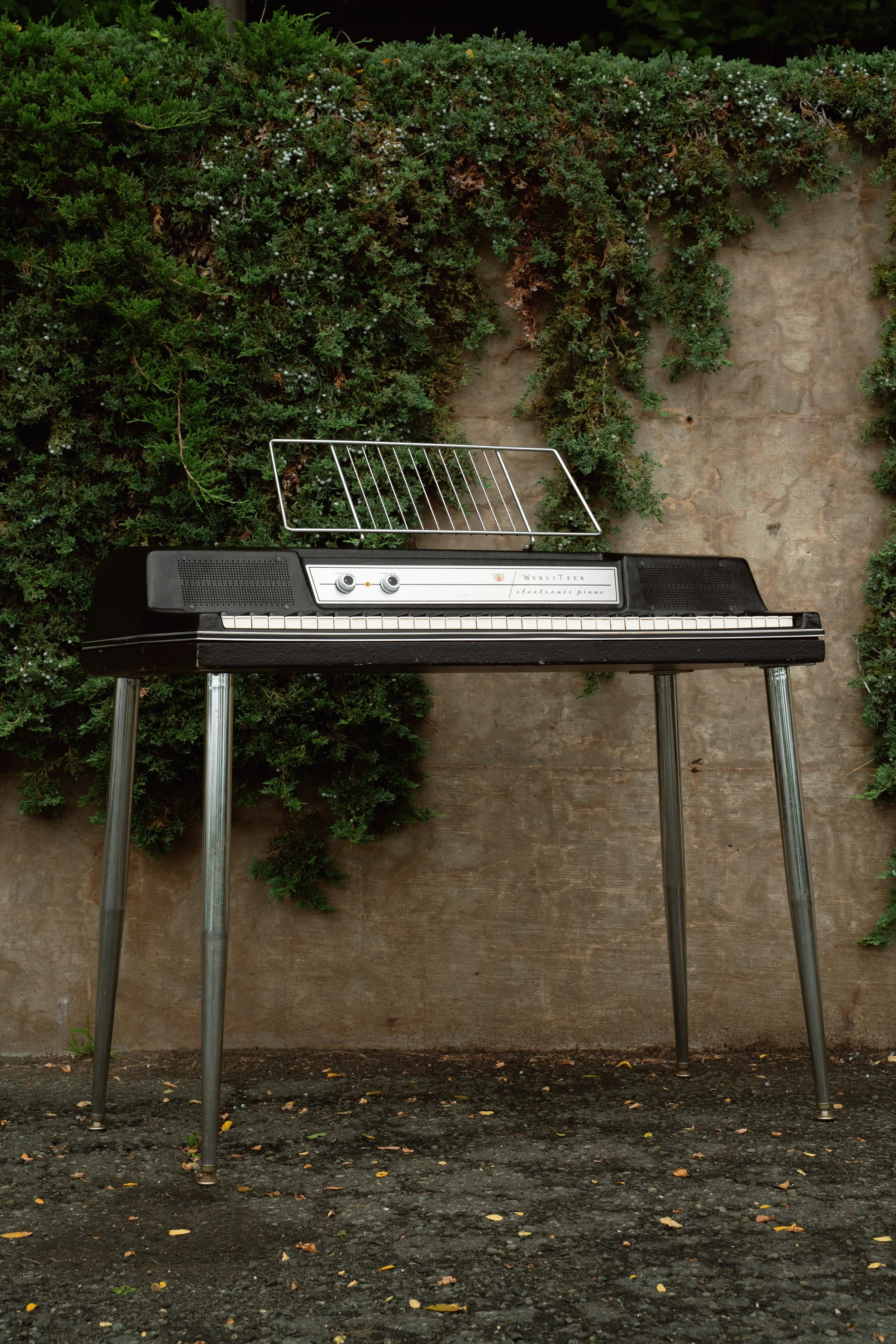
A wise man once said that all restored Wurlitzers are the same, but all unrestored Wurlitzers are deteriorated in their own way. (That's how the quote goes, right?)
In one sense, it is true that no two Wurlitzers have the exact same history, and that history will be reflected in each keyboard's unique condition, sound, and playability. Some Wurlitzers were scrupulously cared for, others were neglected, and some changed hands multiple times and were exposed to multiple usage and storage conditions. This is why it is very difficult to evaluate a Wurlitzer just from photos of its exterior. There are a million different possible mishaps that can affect a Wurlitzer in a million different ways.
On the other hand, our experience buying and restoring unrestored Wurlitzers has shown us that most unrestored keyboards fall into a few general categories. If you can vaguely identify what type of person owned the keyboard, and where it might have been stored, you can make some pretty good guesses about what is going on under the lid.
In this guide, we share how we categorize Wurlitzer electronic pianos based on context clues you might notice from the listing.
How can I determine which category a keyboard falls into?
If you're looking at an online listing, you're probably not going to have a lot of information about the condition of the amplifier or mechanical action. However, you can still deduce a lot of things from context clues in the listing itself. By reading the listing closely, checking the seller's other items, and examining the photos, you can make a lot of inferences about the keyboard. We discuss what to look for in another article. Here, we talk about the different categories of keyboards themselves, and their restoration potential.
The Original Owner
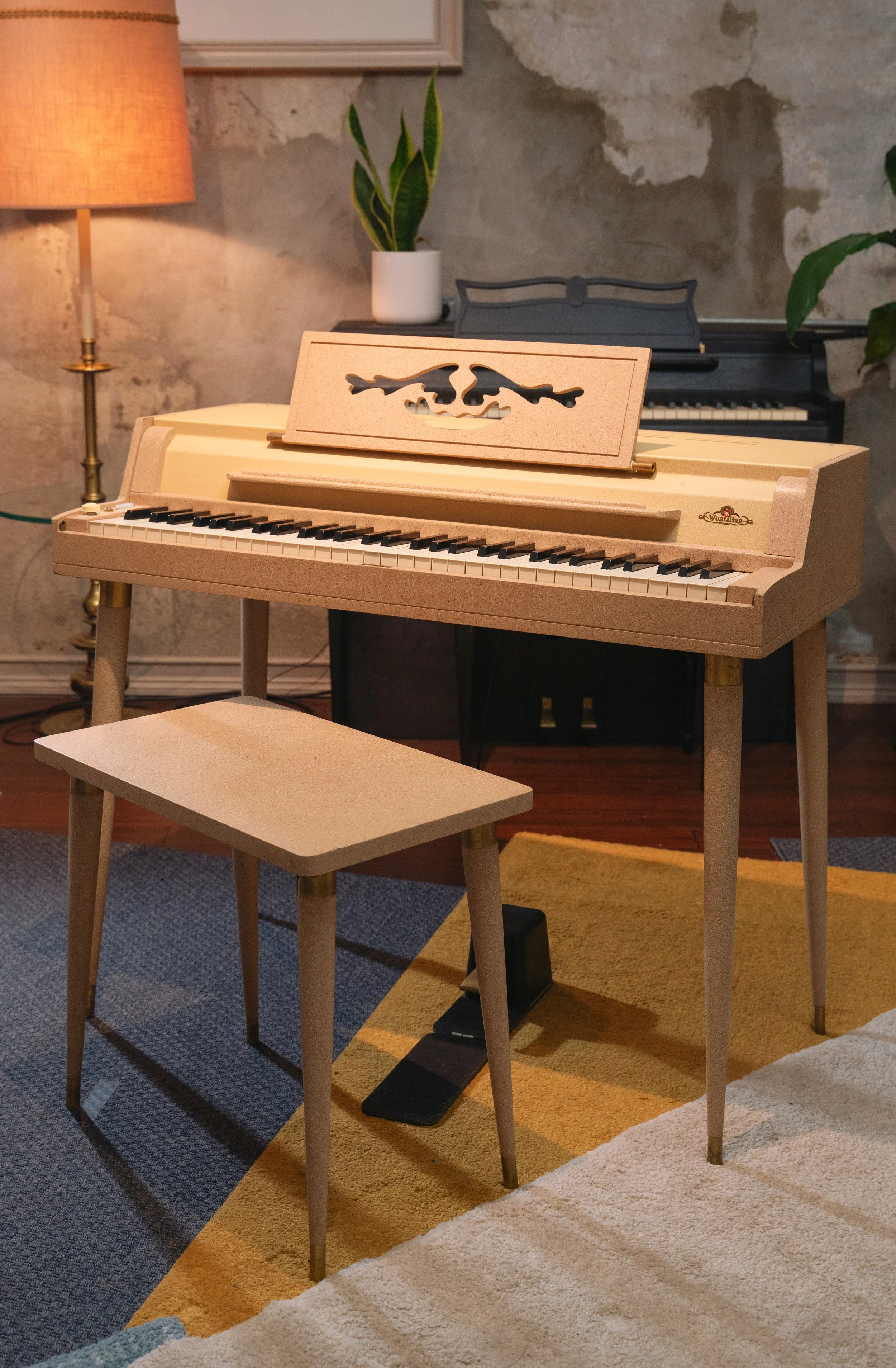
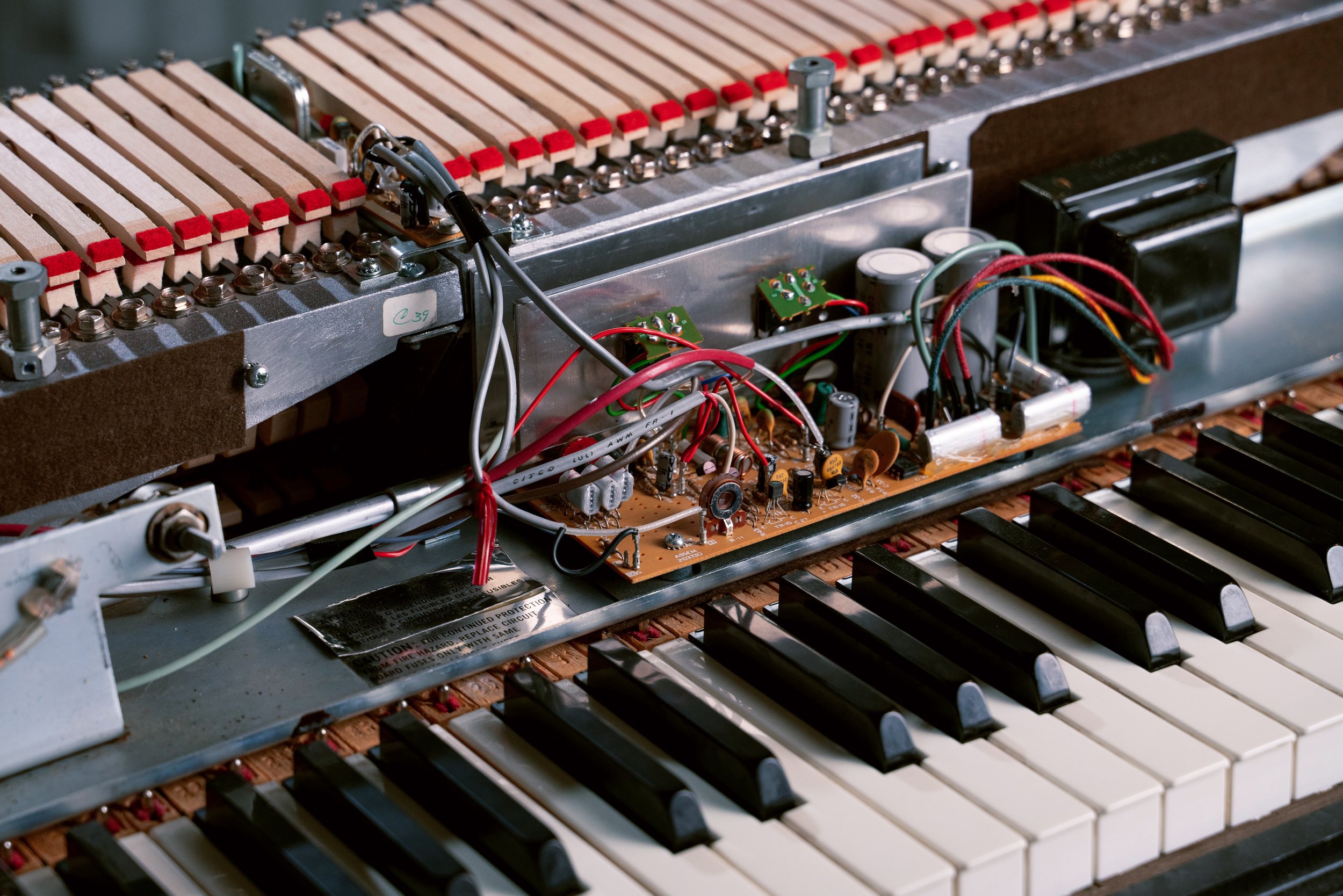
This is the gold standard of unrestored keyboards—one that has only ever been owned by one person, who used it as their personal keyboard. It is usually in exceptional condition, because it was stored in that person's home. Because it was a home keyboard, it only received light use, on evenings and weekends.
The keyboard's original owner could be a serious musician, a hobbyist, or just someone who believes in pianos as home decor. The Original Owner keyboard is in great shape either way. Even a professional musician's home keyboard gets much lighter use than a backline instrument, which is prone to abuse because nobody really has responsibility for taking care of it. In contrast, an Original Owner keyboard has been babied with regular dusting and a room-temperature environment.
An Original Owner has never been serviced—or, if it has, service was very minor. This is because the keyboard has never experienced the type of heavy use that creates serious problems. If you only play your Wurly for twenty minutes per week, it ages at an extremely slow rate. Maybe one July a key swells from humidity, and starts sticking; the next time it is powered up in October, the air is dry and the key is back to normal. The keyboard just doesn't get the level of use that creates noticeable or bothersome problems. Year after year, it hangs out in the shaded quiet of the spare room.
What to look for
You can identify an Original Owner by its bizarre level of cleanliness. Chrome is shiny; keys are bright. Maybe, on first glance, you think that it has a custom paint job or a rare colorway. Then, you look closer and realize that the paint or the plastic lid is original—but because it just hasn't ever seen the sun, it's the same color that it was when it left the factory. It may have original tags or a sales receipt. It may also have its matching bench or other accessories.
The keyboard may be pictured in a setting that has something of a time capsule look. (If someone hasn't updated their keyboard for 40 years, they probably didn't update the couch either.) But it could also be in an antique store or a warehouse—it still counts as an Original Owner if it is being sold by a dealer. If you are buying the keyboard from the literal original owner, or a family member, you should be respectful because it is probably being sold for a sad or bittersweet reason. Plus, if you're friendly, they may be able to tell you the story about when and why it was purchased.
How much should you pay for it?
Original Owner keyboards are really special. Although great Wurlitzers will continue to exist as long as people continue to play and care for them, there are statistically a limited number of keyboards still owned by the person who bought them new. If you see a true Original Owner keyboard—one that shows light use and the characteristics discussed in this section—you can consider it a buy at any price. If it is offered at the low end of market rate, you should cancel your plans for the day and start driving to pick it up. If you are in the market for a Wurlitzer, this is simply not the type of keyboard you should let pass you by.
Likely service issues
Although this keyboard is in exceptional condition, you will likely want it to be serviced. Quirks that someone tolerated in their sentimental old piano may not be as charming to you. There are also parts in the keyboard, such as jack springs and certain types of felt, which are always under pressure. These parts are ready to be replaced no matter how lightly the keyboard has been used over the years.
However, if the keyboard truly had light use, felt such as hammer tips will still have life in them. And if the keyboard was stored in a climate-controlled area, parts such as damper felt will be in great shape. Although damper felt rests against the reed when the piano is not in use, it only really deteriorates if the reed begins to oxidize due to excessive humidity.
The Barn Find
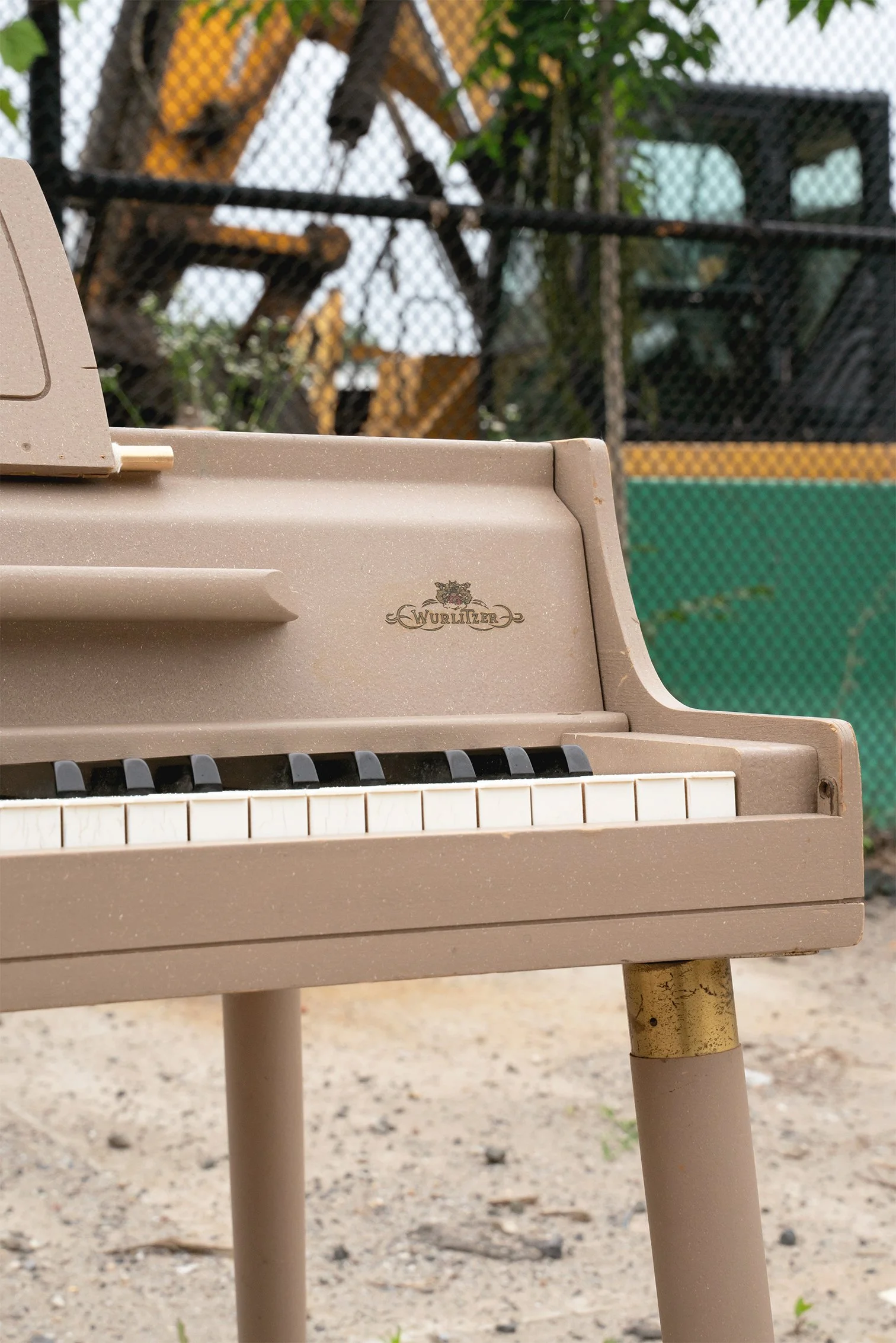
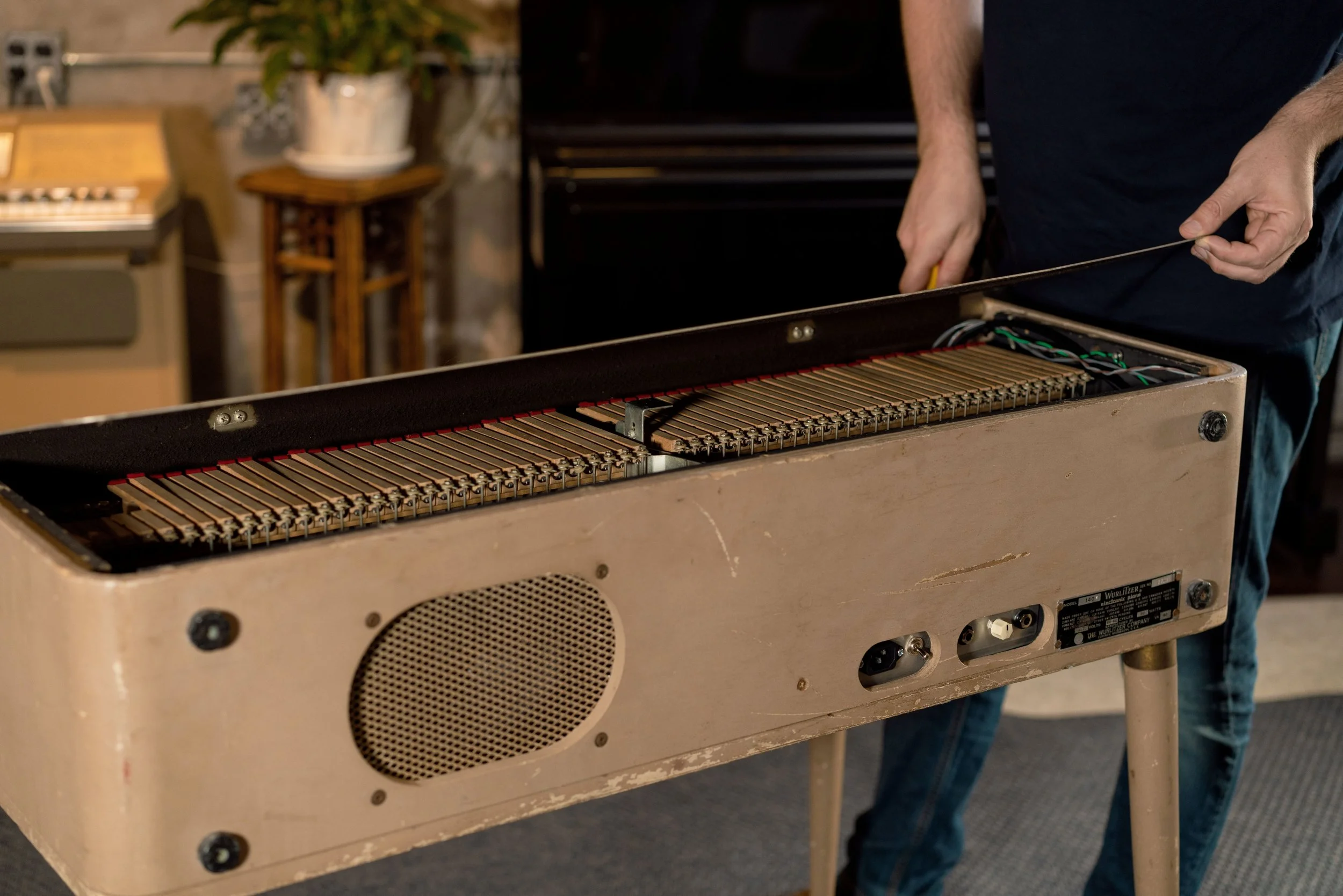
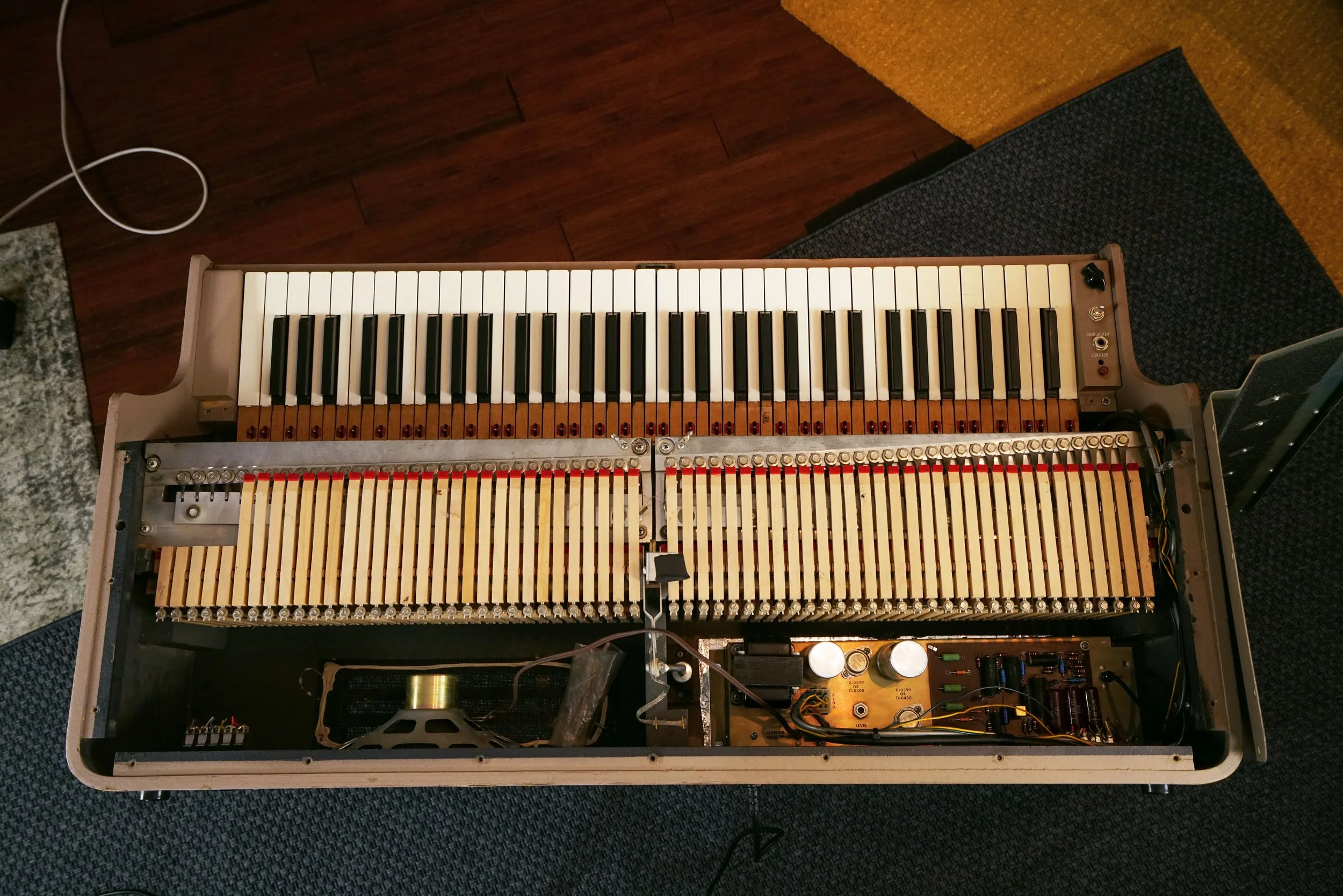
Technically, the Barn Find might be a one-owner keyboard too—its one owner just stuffed in a barn, shed, or garage when they got tired of playing it.
The Barn Find always looks absolutely terrible. It may have scratches or missing parts such as knobs and legs. It might be covered in grime. The longer you look at the pictures, the more you'll find to be concerned about. In fact, the photos often make it look worse. If the seller perceives it as a junky old keyboard that is rightfully stored in a barn, they'll photograph it right where it's been sitting for decades, next to whatever old junk was stored alongside it. The barn probably isn't well lit, so the keyboard will either be pictured in deep shadow or with enough flash to make it look like crime scene photography.
What to look for
The Barn Find is a wild card. The exterior of the keyboard is clearly in poor cosmetic shape. The question is this: is the inside in poor cosmetic shape also? Or did the cool dark barn environment give it a finely-preserved interior, like mold-ripened salami?
There are two potential strategies when purchasing a barn find.
Open it up and check out the inside. You are looking for signs of water damage and pests. These are two major factors that inhibit a keyboard from ever being fully restored to excellent condition. We talk more about the signs of a problem Wurlitzer here. In general, the wood should be a beige color and you should not see any indication that anything ever lived in the keyboard for any period of time.
Or, just buy it. If the keyboard is being offered at a steep discount because it looks bad, consider just buying it. There is a price point where a seller becomes inundated with offers, and you will be competing against many potential buyers. If you insist on coming by to "just check it out," the seller may choose to deal with someone who seems more committed to the purchase. On the other hand, if you indicate that you'll buy regardless of the keyboard's condition, the seller may allow you to skip the line ahead of more tentative buyers.
Basically, if you are not able to look inside the keyboard, you should be getting a really great deal. If you are getting a really great deal, insisting on looking inside the keyboard could make the deal fall through. How much you value the certainty versus price depends on your personal level of risk aversion, which we discuss here. It also helps to understand your local keyboard market, so you can be sure that you're getting a good deal.
Likely service issues
The Barn Find might have any level of issues. For instance, we've seen keyboards that appear to have been stored in a basement since the day they were purchased. This gives the keyboard a scary exterior appearance—but, if the keyboard was never played and the ambient humidity was kept fairly normal, its interior parts will be factory-fresh.
A keyboard that is gross on the outside and excellent on the inside still benefits from service. (The same caveat that applies to the Original Owner applies here.) However, the keyboard will have a head start, and it has the potential to become an extremely touch-responsive, professional instrument. On the other hand, if the keyboard has pest damage or moisture damage, it may require extensive remediation to play consistently.
The Piano Student


Wurlitzer 206 and 206A were sold in bulk to schools, which might have had dozens of electronic pianos in a single classroom. Schools did not buy Wurlitzers because they wanted their students to appreciate the finer points of analog audio. Instead, they bought the Wurlitzers because that was the most convenient way to put thirty-six pianos in one classroom, using the technology at the time. As the years passed, schools packed up their Wurlitzers, wheeled them into a storeroom, and bought a roomful of digital pianos instead.
Digital pianos have been ubiquitous for over thirty years, and many schools liquidated their Wurlitzers long ago. However, you will still occasionally find student-model keyboards that came straight out of the school setting. These keyboards share a lot of characteristics with Original Owner Wurlys.
First of all, the Piano Student usually saw very little actual play time. In fact, some of these keyboards had likely zero play time. For instance, there is a factory flaw in a certain production year for Wurlitzer 206 in which a coupling capacitor was installed backwards. When powered on, the keyboard will appear to pass no audio whatsoever. (If you turn the volume up to 10, you can hear a little bit of signal if you listen very closely.) We acquired a batch of 206 keyboards from a school around 2018, and two of them still had the backwards capacitor. Clearly, the school had purchased these keyboards, discovered that they didn't work, and apparently lacked the administrative capacity to do anything about it. They ended up in a storeroom until we acquired them and repaired the amplifiers.
What to look for
Similar to the Original Owner, a really great example of the Piano Student should be considered an immediate buy. A student model Wurly, as long as it was stored indoors (and, presumably, was the thirty-sixth keyboard in a thirty-five student classroom) is the closest thing you'll get to buying a brand new Wurlitzer. On the other hand, a poor example of the Piano Student is more comparable to the Barn Find.
It should be noted that student model Wurlitzers can have some unusual quirks. First of all, they almost never have the black striping tape that wraps around the perimeter of the lid. The kids clearly got bored and peeled it off when the teacher wasn't watching. In general, many student Wurlitzers show minor acts of vandalism. Problems are usually not too severe, but it is annoying to open up an otherwise pristine keyboard to find that someone was poking pinholes in the speaker cones instead of practicing their scales.
Likely service issues
Service issues can be similar to either the Original Owner or the Barn Find, depending on how the keyboard was stored over the years.
One important note is that student model keyboards had both vibrato and the aux out disabled. In a 206, all of the vibrato components are already installed on the PCB, and the aux only requires two resistors. Enabling these features is mostly a matter of reorganizing the wiring and adding a volume potentiometer. In the 206A, however, the vibrato circuit and aux circuits are present on the PCB, but they have not been populated with components. To enable, you need to add all of the necessary components, which is somewhat tricky because the student PCBs are not labeled with component numbers.
Student models also have unusual wiring configurations in the cabinet portion. In the classroom, all of the student pianos were connected together in groups of six. The students and instructor wore headphones, and the communications wiring allowed them to toggle between their own speaker output, and the output of the group. There is a large plug in the back of the cabinet—sometimes called the umbilical cord—which connected one student piano to the next. This plug has AC mains voltage on it. This is a shock hazard. When using a 206 individually, the AC power to the unused plug should be removed.
The Rock Star
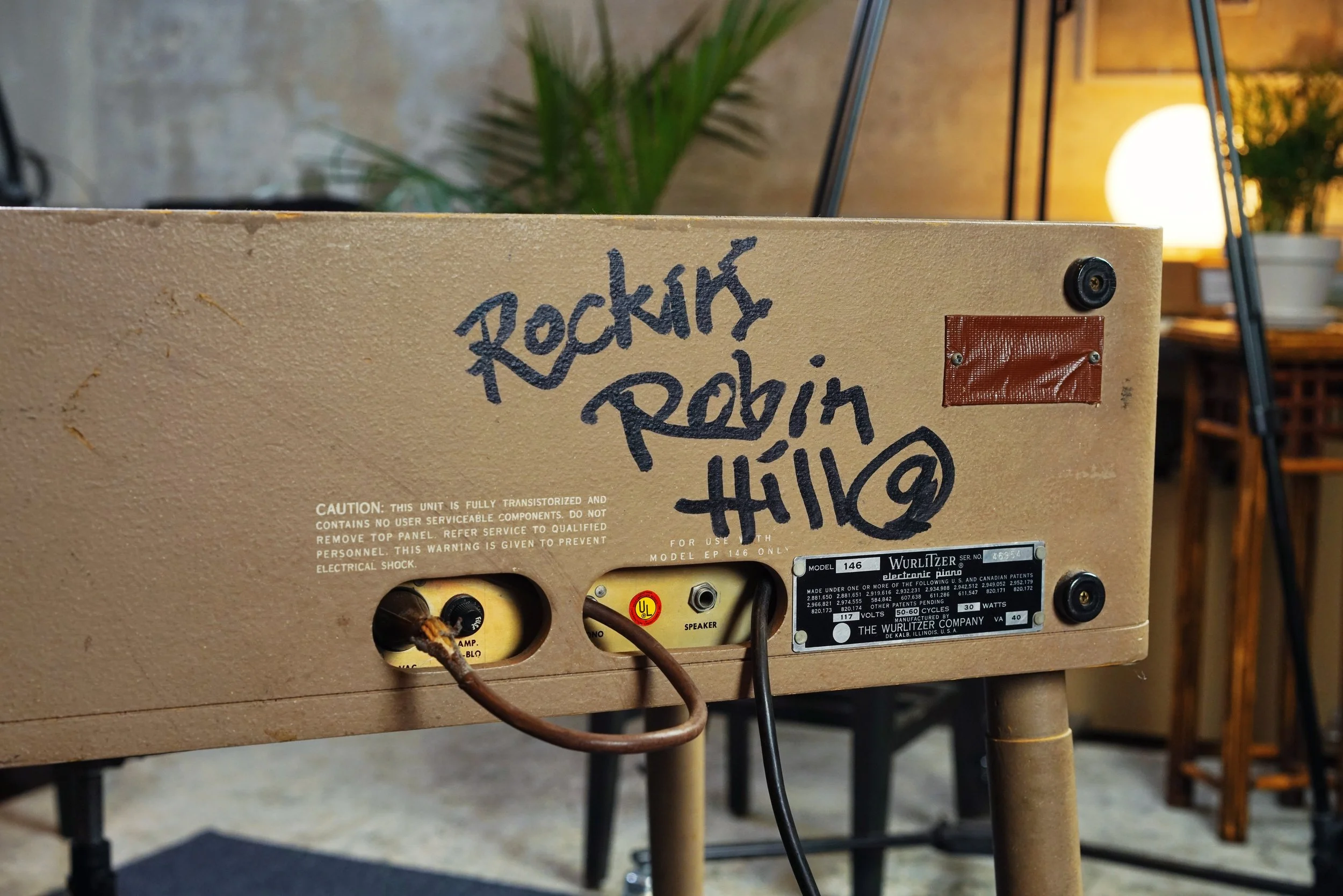
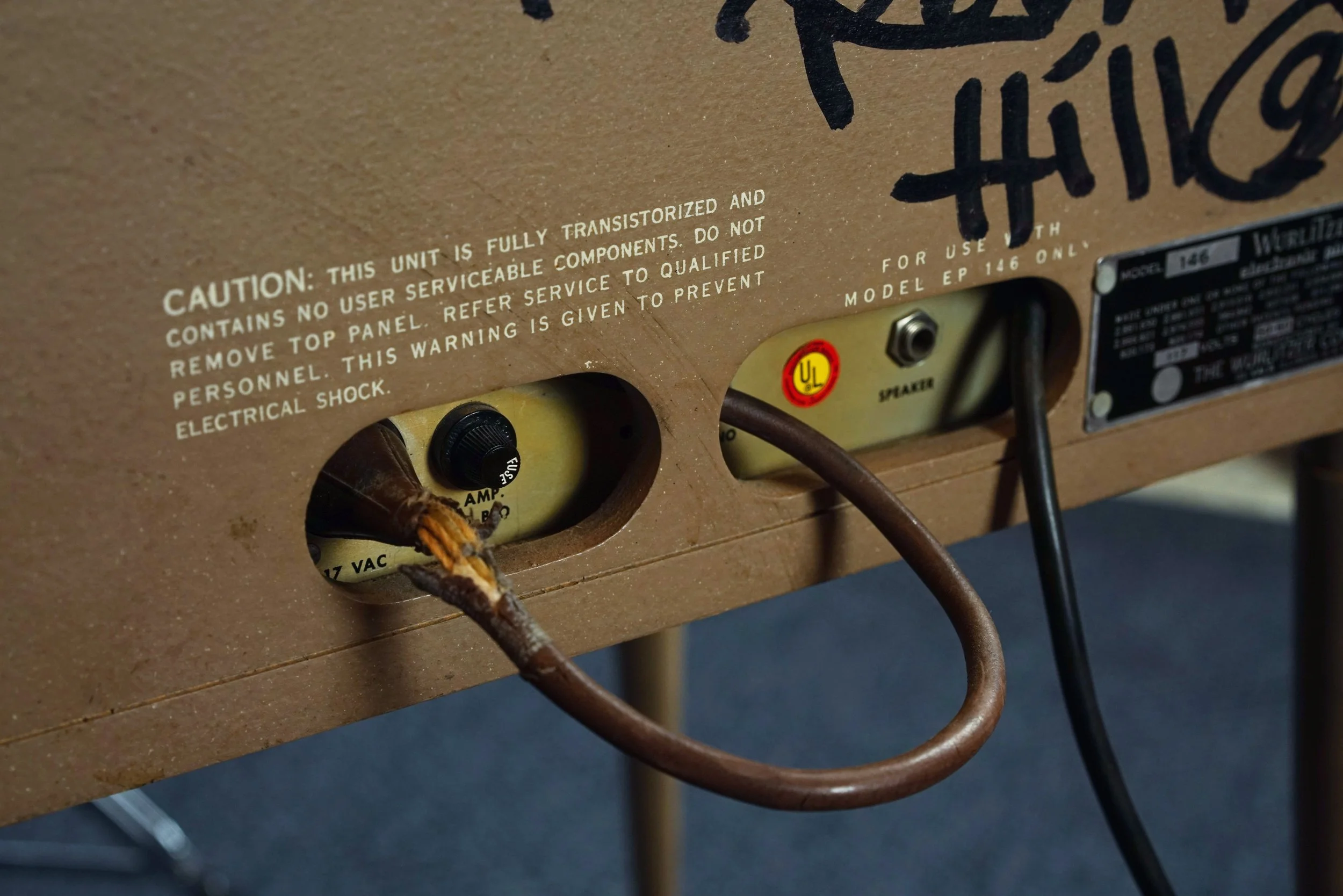
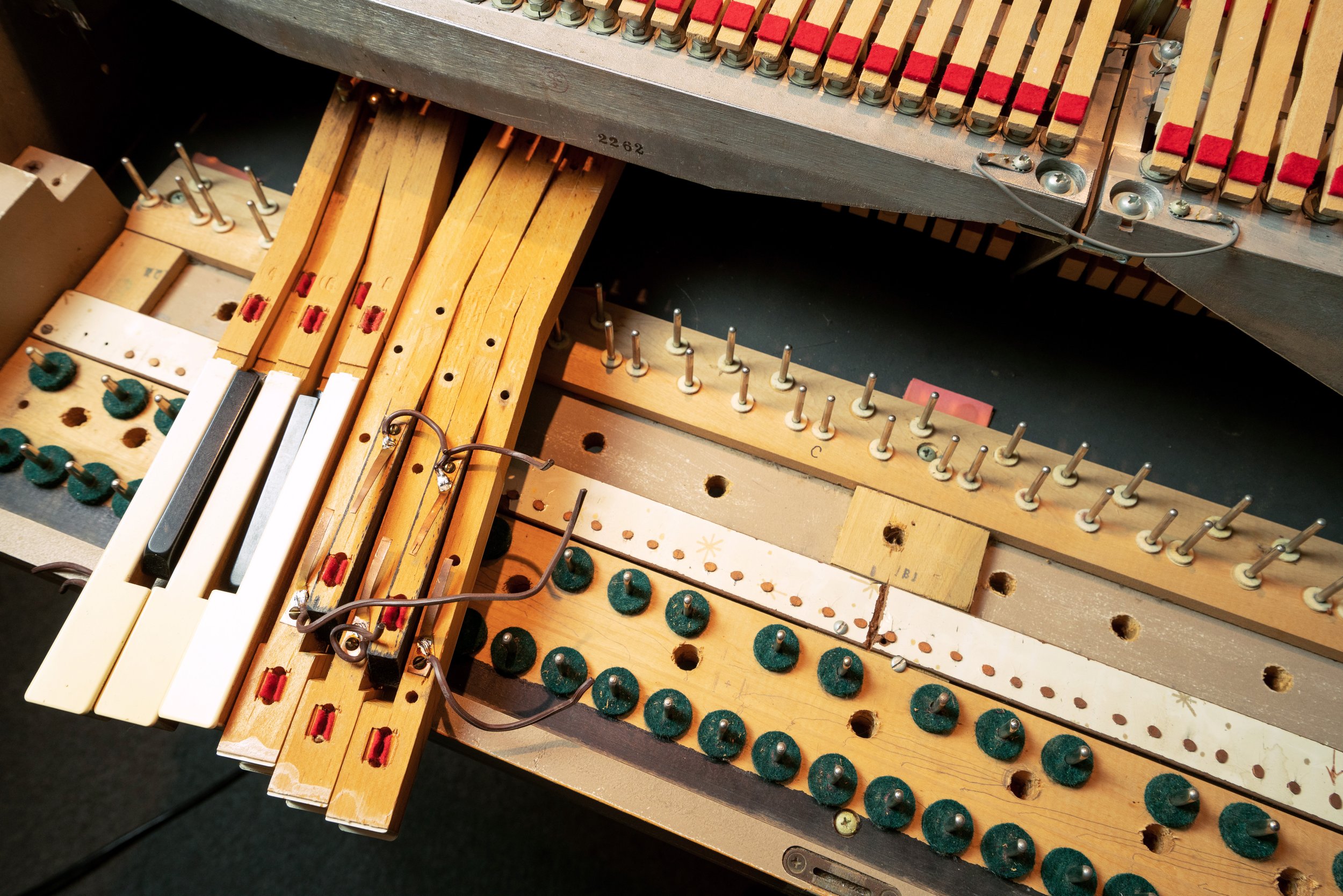
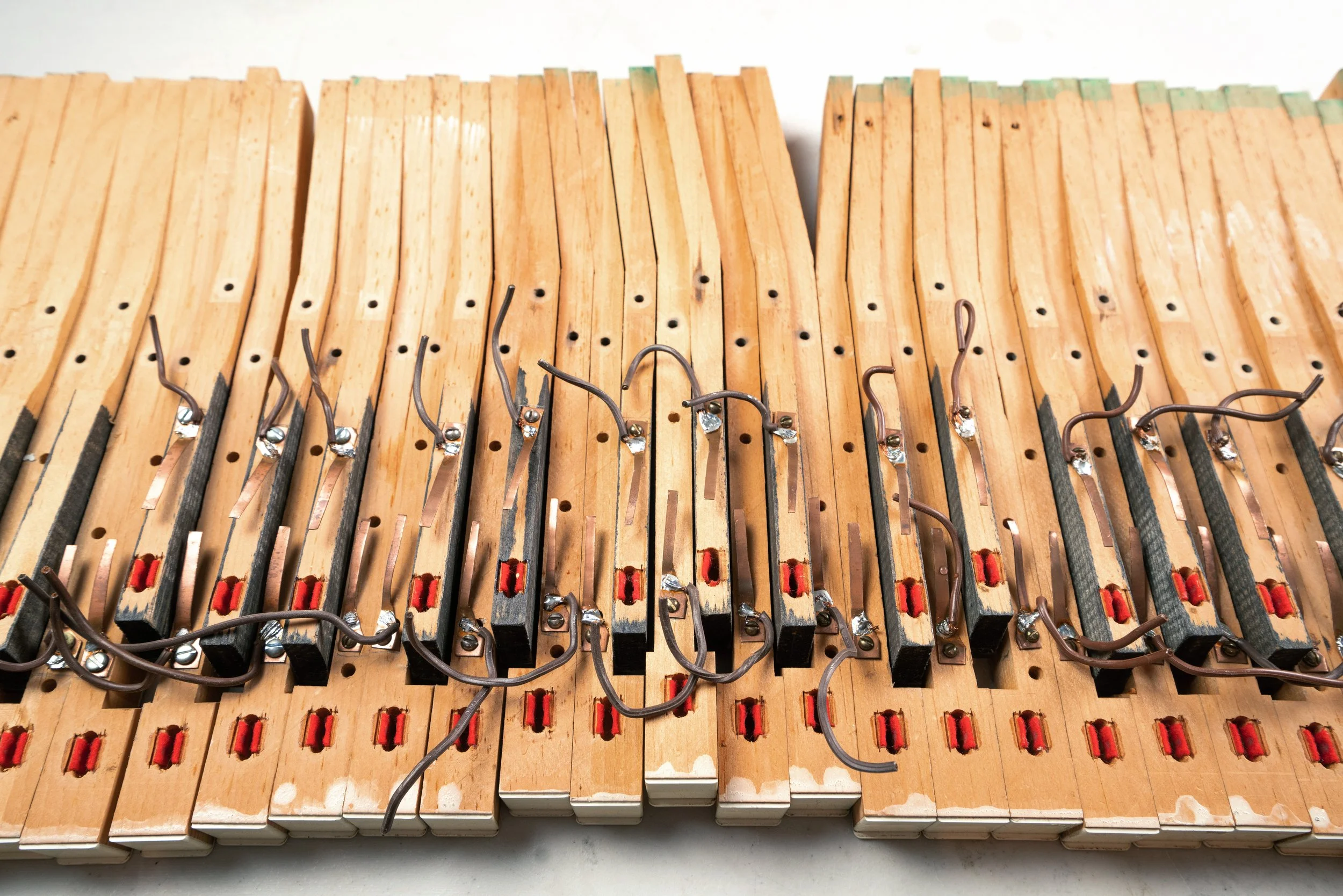
The Rock Star is a keyboard that was owned by a professional musician. It has incredible mojo—you can almost hear the history in every note. If these reeds could talk!! It is undoubtedly the coolest Wurlitzer that you can buy. It is also almost guaranteed to have the weirdest problems you will ever encounter.
Not every Wurlitzer formerly owned by a professional musician is a Rock Star. This is specifically a type of keyboard that was treated unsentimentally, as a tool for making music. As such, it may have been extensively recorded and toured with. Due to heavy use and frequent travel, the keyboard's cosmetics may be poor. It may have structural damage from being dropped or handled roughly.
Because it was maintained for utilitarian purposes, the Rock Star may also have extensive modification. Some mods may be very clever; others could be provisional or poorly executed. Prior fixes may simply have been a band-aid to bring the keyboard back into commission as soon as possible.
What to look for
Cosmetics will generally be poor. However, whenever the keyboard is road-worn rather than dilapidated, resale value may be more or less preserved. Many buyers appreciate the aesthetics and authenticity of a keyboard with visible signs of use. However, although a road-worn look is cool, a buyer should expect a lower price unless the seller can guarantee that the keyboard's poor condition is not reflected in the condition of its interior parts as well.
Another common concern is missing or modified parts. As we describe in the next section, careless or excessively specific mods can reduce restoration potential.
Spills are another common hazard. If the keyboard was used a lot, somebody probably rested a drink on the lid at one point or another. If the drink tipped over and spilled over the keys, it is very common for people to let it "air out" rather than opening up the lid and cleaning up immediately. However, there is a lot of unfinished wood inside of a Wurlitzer, and, if a spill doesn't dry quickly, irreplaceable wooden parts can warp and lead to playability issues.
As we will explain in another article, cosmetic issues can be a proxy for overall condition because it can indicate poor storage conditions and mishandling. The unfinished wood inside of a Wurlitzer can be permanently damaged through long-term storage in wet conditions. Also, the mechanical action of a Wurlitzer is fairly complicated and can break through carelesss use. Any keyboard with poor cosmetics should be purchased at the low end of the market value, unless the seller can demonstrate that the interior parts are in good condition and the keyboard has a high level of playability.
Likely service issues
Modifications are not necessarily bad. For instance, modifications that provide extra shielding or additional outputs can be useful. On the other hand, a lot of mods were installed experimentally, and may or may not fully address the targeted problem. For instance, a lot of Wurlitzer 145 keyboards have mods that seem to attempt to address the amplifier's noise floor. A lot of people assume that the noise comes from the power switch, and they try to find an alternative place to mount it, sometimes drilling into the lid or the right cheek block. However, the Wurlitzer 145 is more likely to have noise problems stemming from a flawed wiring layout and/or declining power tubes. Moving the switch without addressing other noise problems inherent in the amplifier just results in a noisy keyboard with a different switch location.
There was also a period in the 90s and 00s where electronic piano reeds were difficult to find. Musicians would break a reed, and suddenly a keyboard that they rely on is now functionally useless. Often, people would replace a reed with whatever was available, including makeshift reeds or reeds from a different model of Wurlitzer. One indication that a Wurlitzer may have the wrong reeds is a note that is too loud or doesn't sustain as well as its neighbors. Now, new reeds are available for certain models of Wurlitzer, in which case it is easy to switch the wrong reed for the right one. However, if the previous owner filed the reed bar in order to make the wrong reed fit, the sound of the keyboard will always be compromised.
It is also a good idea to check for structural damage. If it is not possible to examine the interior of the keyboard, one proxy is sticky keys. Most of the time, sticky keys are caused by aging key bushings, and the fix is relatively simple. But—very rarely—keys are stick due to a structural problem, such as a broken key frame or warped wooden parts.
It can be difficult to tell the difference by feel alone. In general, if keys are sticking across every register, and their feel suggests something of a reluctance to return instead of a literal stuckness, the problem is overly tight key bushings. If keys are sticking in just a certain part of the keyboard, and they feel as if something physical is inhibiting their return at all, there might be a broken part that is holding them in place.
The Back of the Studio Special
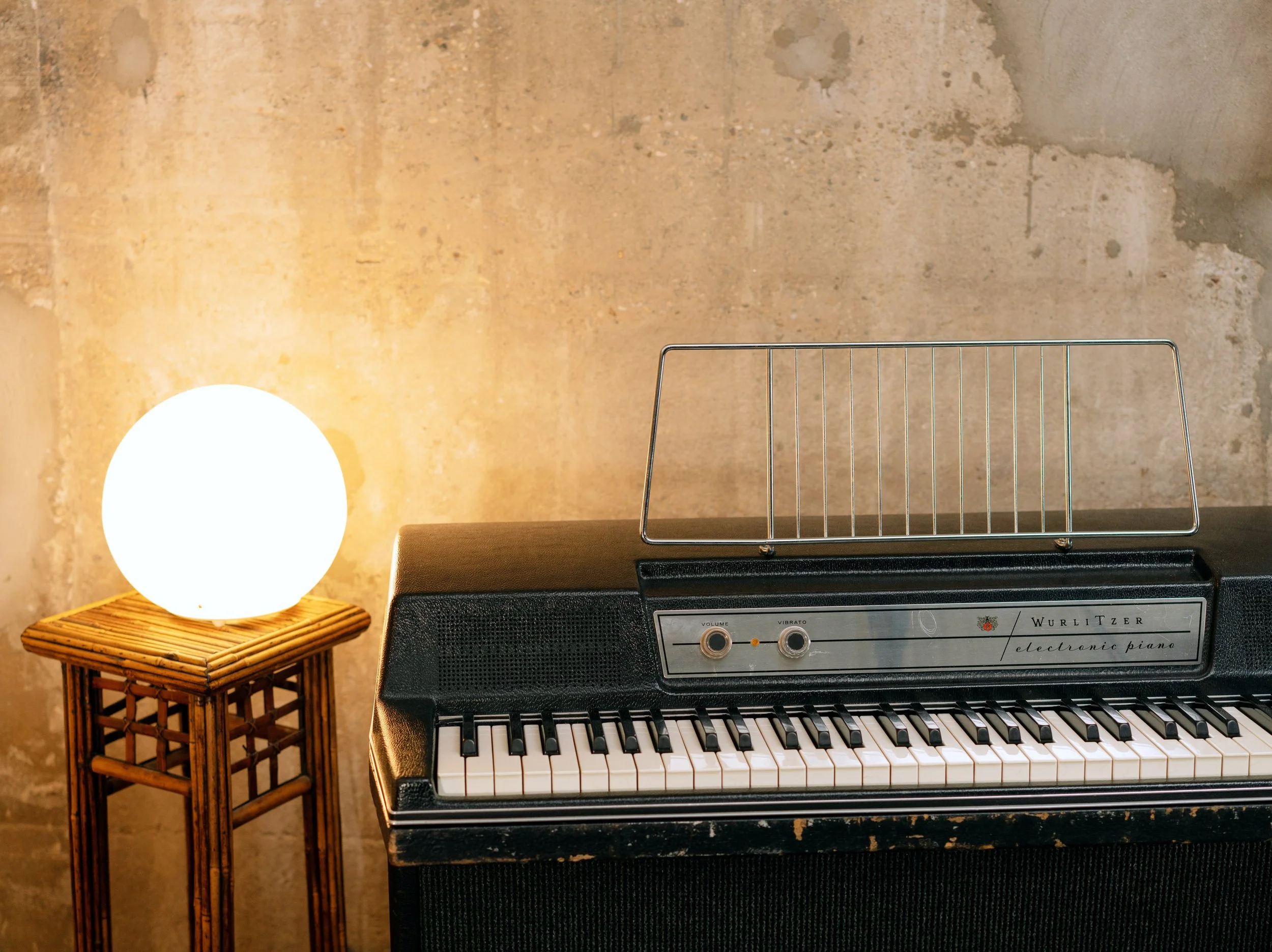
The Back of the Studio Special is a studio Wurlitzer that is nominally available for use, but it is in such neglected condition that nobody wants to play it. Eventually, the Wurlitzer is relegated to a storeroom. Or, if it is kept on display, it is used as a stand for other, more low-maintenance keyboards.
A characteristic of the Studio Special is that it was either never serviced, or reluctantly serviced. Fixes are low-effort and patchwork. It does not have the high level of workmanship sometimes indicated in repairs to the Rock Star. Studio patrons who attempt to play it might become so irritated by its indifferent level of playability that they may write off Wurlitzers altogether.
Whether this keyboard is a good buy depends on why it was sent to the back of the studio in the first place. Sometimes, the keyboard was never used because of its inherently high noise flor. This is true for certain Wurlitzer 200 production years, plus many of the tube amp models. Remediating the noise floor (which is relatively simple in a model 200 and more complicated in a tube amp) makes these keyboards sound great. In this case, you are left with an excellent keyboard with low overall play time (if potentially mediocre cosmetics).
In other cases, the keyboard had, at some point, developed a serious issues that makes it difficult to play or record with. Nobody considered the keyboard valuable enough to fix, and it was banished to the back of the studio. In this case, some troubleshooting may be required. If the keyboard logged a lot of use time before the malfunction put it out of commission, it may also have severely worn-out felt parts and jack springs.
What to look for
This keyboard is paradoxically a good buy (with one major caveat, discussed momentarily). Indoor storage leaves the wooden action parts in excellent condition, which is a great starting point for a full restoration. Many examples of the Studio Special show significant deterioration in all of the ways that don't matter, because the worn-out parts are replaced as a matter of routine in any comprehensive restoration.
However, because the keyboard was kept in a commercial setting where nobody really has personal ownership of any particular piece of gear, it might show undesirable signs of abuse. Many people treat gear more casually when it doesn't belong to them, and if the culture of the studio doesn't encourage promptly addressing damage, the keyboard will deteriorate through a hundred little spills and accidents. Moisture damage and damage to certain structural parts are very difficult to remediate.
If it is not possible to confirm the condition of the keyboard, or if the exterior shows evidence of abuse or poor handling, we recommend buying at the low end of market value. If the seller can show that the interior wood parts are in good condition, however, a higher asking price may be warranted.
Likely service issues
Service issues are varied and depend on the details of the keyboard's storage. However, most examples of the Studio Special come to life with a complete restoration. Replacing felt can make it play with a high level of touch-responsiveness, and servicing the amplifier can ensure excellent tone. In fact, this type of keyboard is one of the most satisfying to restore, because the transformation is often dramatic.