
What an Online Listing Can Tell You About a Wurlitzer’s Condition
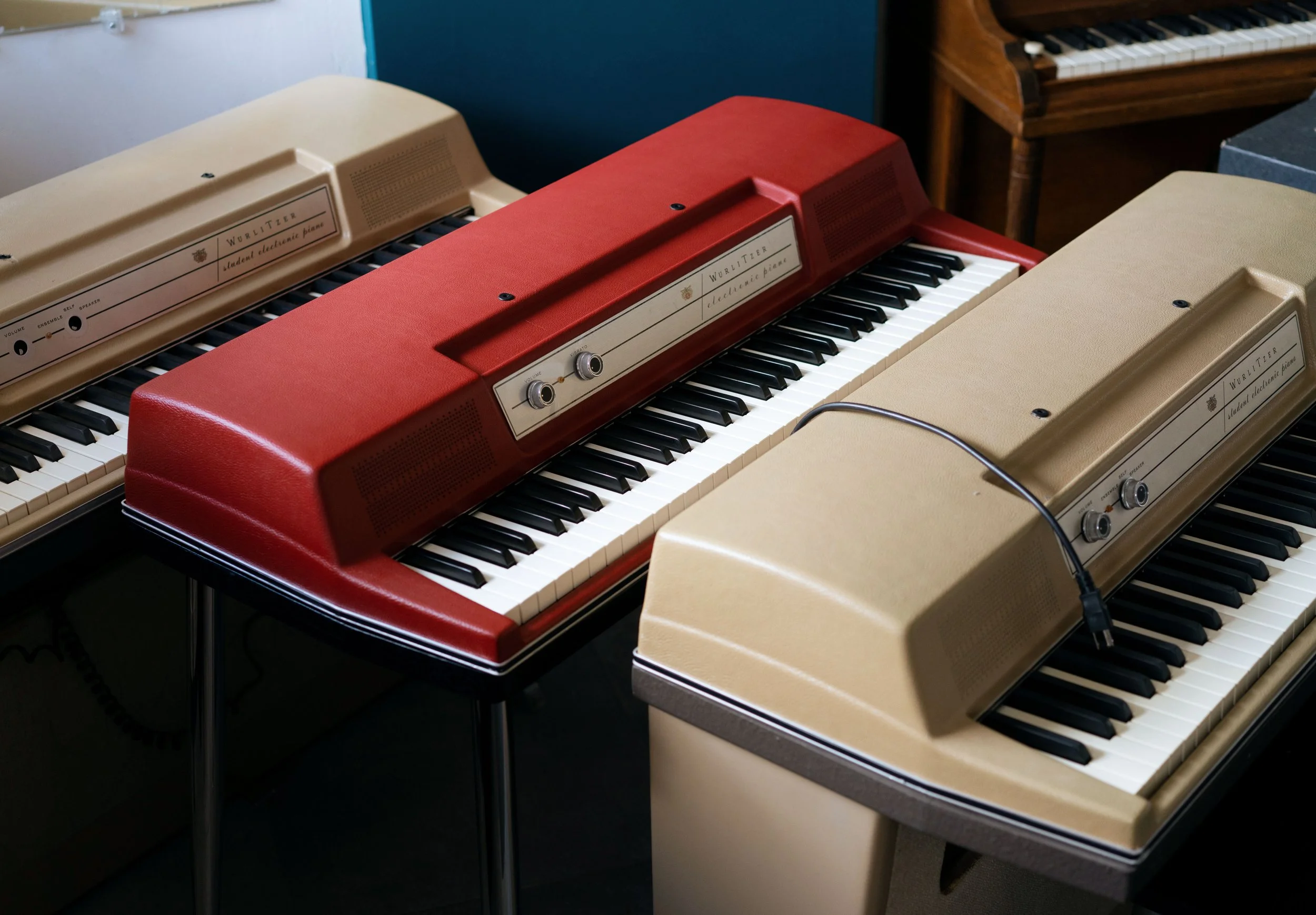
If you're looking at a listing for a used Wurlitzer electronic piano online, you're probably not going to have a lot of information about the condition of the amplifier or mechanical action. However, the photos and the description can tell you much more about the Wurlitzer’s condition than you might expect. (Our Field Guide to Wurlitzers might help with your evaluation as well.)
The following advice should be understood carefully. The point of the exercise is not to investigate the seller. We are interested in the keyboard, and we are only interested in the seller insofar as we want to present them with an offer that satisfies everyone.
If you were to make an offer on a keyboard that we are selling on this website, you would probably want to read up a little bit on who we are and what we do before writing us an email. You would do this because you would want us to take your offer seriously and with an open mind. It’s normal to do the same for someone on Facebook Marketplace, but the instrument may be their personal instrument and it may be photographed in their own home. In this case, the line between personal and professional is not as clear, and you have to approach the situation with a little extra care and tact. Do not send the seller overfamiliar messages just because you’ve looked at their public profile and learned one or two things about them.
What to look for in online marketplace photos
When you’re buying a Wurlitzer on a platform such as Reverb, eBay, or Facebook Marketplace, the first thing you should do is examine the photos carefully. Don't just look at the keyboard. Look at the style of photos, the setting and the objects surrounding the keyboard.
Is this keyboard currently located in a studio, a living room, a storage unit, a garage, or a shed? Is the room neat or messy? Does it look like the keyboard has been sitting in this exact spot for decades? Or has the seller staged the keyboard in a more photogenic place? Is the photo a quick snapshot or an elaborately composed product photo?
The answers to these questions can tell you something about who is selling the keyboard and why. The point isn't to judge the seller, their interior decorating, their photography skills, or their standards for housekeeping. There are a lot of reasons why someone might take a messy photo. For instance, they might be in the middle of a move, which tends to generate a lot of weird piles of stuff.
Instead, the point is to try to determine what the keyboard's storage conditions were like. If the keyboard is pictured indoors in what appears to be the place it has spent the last thirty years, you can make some assumptions about what the climate has been like. In this case, the keyboard probably hasn’t suffered the kind of severe humidity and temperature swings that happen in a semi-outdoor space like a shed. But if the photo was taken in the seller's driveway, you don’t know if it was previously stored in the seller’s guest bedroom or their basement crawlspace. You will need to examine the keyboard’s condition more closely, and the price may require you to check under the lid for environmental problems that aren’t easily remediated.
You can also make a guess as to whether the seller is a musician or a professional reseller, and whether they are likely the original owner or a third party. All of these people will have a different emotional attachment to the keyboard, which will affect how aggressively you can negotiate the price. For instance, if someone has had the keyboard in their home for thirty years, they might be okay waiting a couple of weeks for the best offer. But if a professional reseller is selling the keyboard, they may be happier flipping it sooner, so that they can move on to different projects. In this case, you can attempt a respectful lowball offer.
What to look for when reading the listing’s description
In our own buying ventures, when we read the description of a keyboard listing, we are not reading it like a book or a magazine article or any other media that is known for its factual reporting. This is not because we don't trust private sellers. We don't trust or mistrust them; this factor is irrelevant to the way we approach a transaction. Instead, we know that just because someone owns a keyboard doesn't mean that they know how it works, how to play it, or what type of repair it needs for full functionality.
It is true that people who sell a keyboard have a financial incentive to present it in the best light possible. However, as Tropical Fish, we are looking for characteristics that make a keyboard a good restoration candidate. We are perfectly happy to buy a keyboard that is in utterly dilapidated condition, and we have a very firm budget that protects us from uncertainty. It is not obvious to a seller what factors we are looking for, so we don't expect to see any particular feature listed in the description.
Instead, when we read the description, we are looking for clues about the provenance of the keyboard. Is the seller a long-term owner, or a third party? Is it likely that the keyboard was taken care of, or is it a barn find? Does this person sound like they've logged a lot of hours playing, or do they seem unfamiliar with the keyboard's operation? And so on.
Of course, you can always ask the seller these questions directly. In fact, it is often useful to ask the seller a question in order to break the ice and begin a negotiation. The seller's answer can confirm that the transaction is genuine, if that is a concern of yours. Talking to the seller can also help you gauge their motivation to sell, which can help you determine the type of offer you should make.
However, asking a question is risky if your question is too difficult or too personal for the seller to comfortably answer. If the seller is being inundated with offers, they might ignore questions they perceive as annoying in favor of negotiating with a buyer who seems less high-maintenance. Reading the description can help you gauge how much a seller knows about the keyboard, and can help you ask a question that the seller is comfortable addressing.
Look at the seller’s other listings
Checking out the seller's other items is helpful for a few reasons. First, it will help you gauge whether the seller is a professional, or just a person getting rid of an old keyboard. If the seller is an estate liquidator, they may have other listings of items from the same estate which can often indicate something about where the keyboard came from. If the seller is clearly just a private individual, the other stuff that they are selling can indicate something about how long they've had the keyboard, or whether they are a serious player or a very casual hobbyist. For instance, if everything that the seller has listed is from the 1970s, either the seller is a very enthusiastic vintage collector, or the seller may be the keyboard's original owner.
If the seller has a lot of musical equipment for sale, it is obviously likely that the seller is a musician. This can give more authority to any observations the seller has about the keyboard's playing condition (if that is important to you), but just because the person is a musician doesn't mean that they have any special insight into the repairs that it may need.
Also, there may be accessories to the keyboard among the seller's other listings. For instance, an estate liquidator may have the matching bench without realizing what it is. (A lot of nonmusician sellers mistake the bench for a side table.) If the seller has another item that you are interested in, you can make an offer that encompasses both.
Putting it all together to find the right Wurlitzer for you
The best way to understand what kind of work a Wurlitzer needs is to take it home and disassemble it. Since you can’t do that until you’ve purchased the keyboard, the next best thing is learning as much as you can from the information you do have—the listing. The tips above should help you learn the things you need to make an informed buying decision.
No unrestored Wurlitzer is perfect. If you require a high level of playability from your keyboard, you should expect to do some repairs. After 40+ years, many instruments are ready for an overhaul, and we typically replace felt and rebuild the amplifier as a matter of course. However, it is important to evaluate the listing closely—you want to end up with a keyboard that has the usual problems, not intractable problems that require serious remediation.
By examining listing photos and thinking about the keyboard’s history, you can be more confident about your purchase. If you need a second opinion about any keyboard for sale, feel free to ask us via the Wurly Hotline.