
How to buy a Wurlitzer electronic piano from an independent seller—for less than you think
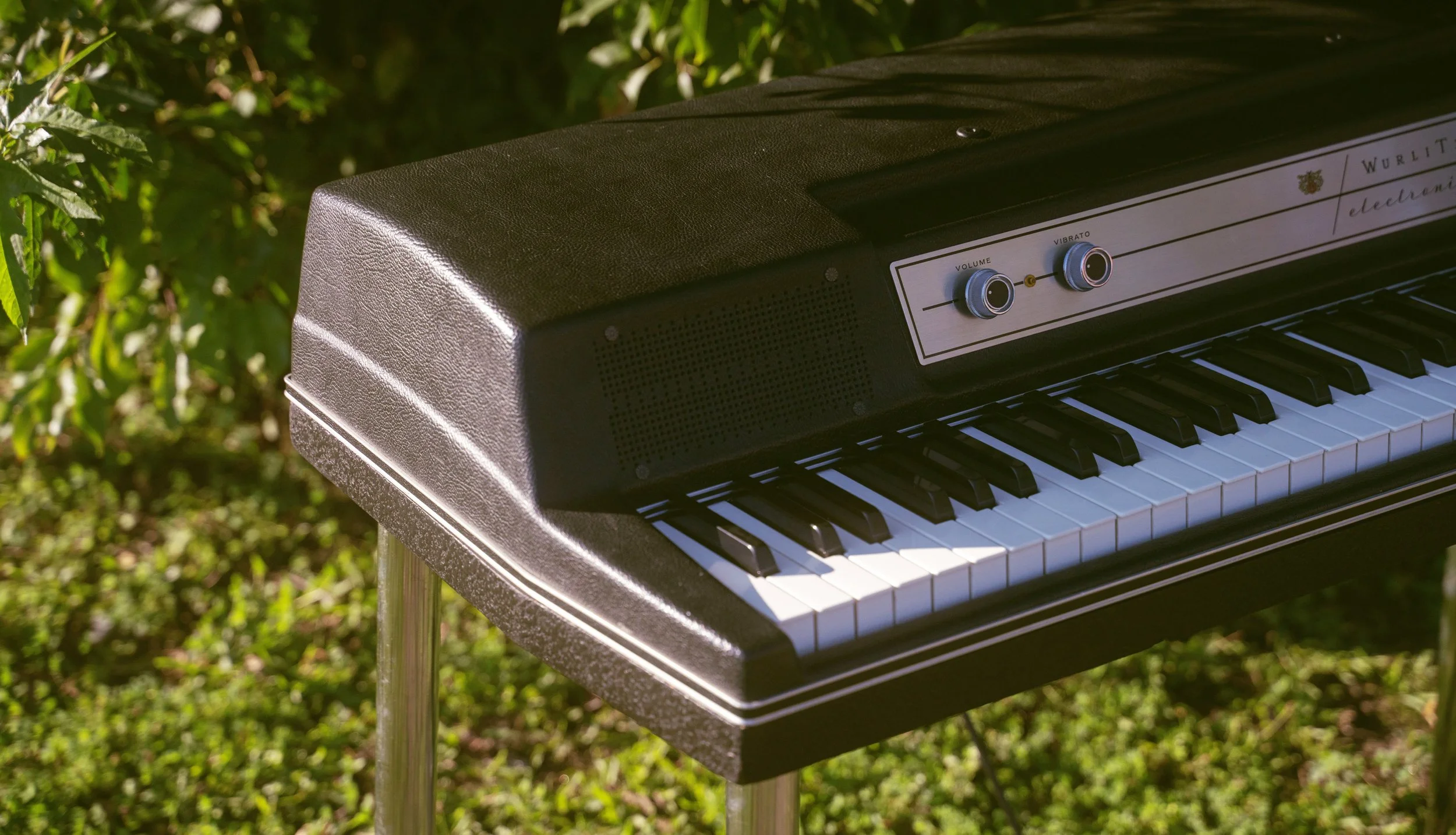
A really nice-looking Wurlitzer 200A that we found online
Need a second opinion on an online Wurlitzer listing? Send us a few photos via the Wurly Hotline and we can tell you how much work a Wurlitzer is likely to need.
Since Wurlitzer electronic pianos have been out of production for around 40 years now, the most reliable place to find them is on a selling platform like Reverb, eBay, or Facebook Marketplace. Generally, the seller is not a professional restorationist or even a flipper, but an individual who happens to have a keyboard and would like to sell it for money.
Because we live in a capitalist society, one would think that many people would be familiar with the basic strategy of exchanging money for goods. However, the appearance of a really nice-looking unrestored Wurlitzer on a platform like Facebook or Reverb sometimes elicits some very weird and unpleasant reactions from purported buyers.
If you are a kind, patient, and relatively normal person, you have an immense advantage in buying keyboards online. We cannot even tell you how many extremely competitive keyboards we've been able to buy just because we were the only buyers that approached the transaction respectfully.
Remember that the seller is
a human being
who may have an emotional attachment to the keyboard they are selling
who may have put a fair amount of work into the keyboard they are selling
who has a full and complete life outside of Craigslist/Facebook Marketplace/Reverb
and is not trying to persecute you just because they want money for their product.
Additionally, a lot of Wurlitzers come up for sale because they were part of someone's estate. In less euphemistic terms, this means that someone very close to the seller has died and the seller has been tasked with getting rid of their loved one's possessions. The Wurlitzer may have belonged to their father, their mother, their brother, their sister, or their child. The person may have died last week or ten years ago. The seller will be emotional either way and they do not want to hear your rude or passive-aggressive offers.
Thus, you should not approach the transaction antagonistically. In fact, you can often score a reasonably-priced keyboard just by being nice.
Rule 1: Wait for the right keyboard
There's a lot of indignation out there about the high cost of Wurlitzers. Of course, the high cost of Wurlitzers is relative: people have been appalled at their exorbitant pricing ever since we started buying our first ones for $400 around 2014. At the time, we read forum posts claiming that any seller who priced their Wurlitzer above $100 was basically corrupt and delusional.
Wurlitzers are incredible instruments with complex mechanical action and great-sounding vintage electronics. Nobody is making any more of them, and quite a few ended up at the dump back in those sub-$100 dark ages. In our opinion, Wurlitzers are worth every bit of whatever it is they cost. (We're not going to put a number on this statement because we stand by it regardless of the market rate. And no, it's not because we have a secret hoard of Wurlys that are going to make us rich one day. The vast majority of the Wurlitzers that come into our shop go right back out the door.)
We are not inclined to gatekeep Wurlitzers. If we were standing on the Miss America stage and our final question had to do with our plan to initiate world peace, our answer would be to give every person on earth a Wurlitzer electronic piano. We understand that the high cost of Wurlitzers presents a significant barrier to a lot of musicians who would like to own one in order to make music.
However, if you open up Reverb or Facebook and see Wurlitzers being sold for $4000 or $5000, you should understand that this is not necessarily what you must pay for a Wurlitzer. If you want a restored Wurlitzer (like the ones we sell), then of course the cost of the restoration will raise the price significantly. However, an unrestored Wurlitzer can still be found for significantly less than published prices if you approach your search strategically.
Tip #1: Check listings regularly
Buying a Wurlitzer is a competitive endeavor, and Wurlitzers in good condition at the low end of the price range disappear very quickly. If you're not checking daily or at least weekly, you will miss the affordable keyboards.
Another upside of checking listings regularly is that you will get a sense of what kind of keyboards tend to hang around. Generally, keyboards that are in poor condition have less demand, and they spend more time up for sale. If you buy a keyboard in poor condition, it’s not the end of the world, and in many cases it is more fun to restore a keyboard that arrived in fairly bad condition. However, you should buy a problematic keyboard because you want it and the price makes sense. Don’t buy it just because it was the only keyboard within a 10-hour drive.
Tip #2: Be willing to travel
The furthest we've personally traveled for a Wurlitzer was Oklahoma (although we've had Wurlitzers shipped to us from more far-flung states). If you have the ability to hop in the car and go, you'll have access to many more keyboards.
If you can't invest the time it takes to drive across the country, hiring a service like Uship can open up wider geographical areas. Most sellers are unwilling to ship Wurlitzers, but many will facilitate a pickup by a freight or packing service if you ask.
Tip #3: Don't be afraid to haggle
The key to haggling is understanding that nobody wants to get taken advantage of. If you approach people respectfully, they are more likely to want to work with you. If you act like you're trying to somehow manipulate the situation, sellers will act more guarded and you will have a more difficult time finding a deal.
From a seller's perspective, lowering the price below a certain point invites weirdness. Having the lowest-priced keyboard on a platform basically guarantees an overwhelming wave of offers. Some people like the attention; some people would prefer to give the item a slightly high asking price just so they can deal with one offer at a time. Furthermore, some buyers read a low price as desperation, and they will calibrate their lowballs accordingly.
So, just because a seller has the price at $X doesn't mean they intend to sell it for $X. Sometimes, the seller is expressing that $X is their ceiling. In fact, they will be happy with some number lower than $X, and any buyer who engages the seller in respectful negotiation can easily learn what that number is. Potentially, it is a much lower number than what market rate appears to be—and it doesn't show up in sold listings, because the whole exchange happens in private messages.
The rest of this guide will cover some techniques to respectfully negotiating a lower price for a Wurlitzer electronic piano. If it works for you, and you acquire a piano that needs a little work, feel free to ask the Wurly Hotline for tips on how to restore your new Wurlitzer.
How to negotiate for a Wurly as a buyer
The golden rule: Don't be negative
The keyboard may be a complete piece of junk. The "restoration" that the seller has attempted may be obviously incomplete and amateurish. Insult to injury, it may be listed for a price that is utterly delusional. You cannot mention any of this if you actually want to buy the keyboard. If you want to hurt a stranger's feelings on the internet, then, yeah, let loose—tell them that it's the ugliest keyboard you've ever seen, their asking price is depraved and that you can see orange peel in the custom paint job. Why not add that their haircut is straight out of 2009 and their home decor looks like it came out of the Backrooms? They're going to block you either way, so you might as well get it all off your chest.
Of course, this doesn't mean that you shouldn't negotiate. You definitely should negotiate—negotiate aggressively, even. At the same time, you have to be respectful. And if the negotiation falls through, and you can't come to a deal with the seller, you have to just drop it and move on to the next keyboard.
The difficulty is that many people interpret negotiation as conflict. Thus, if you are in conflict, it is okay to come across as rude and antagonistic. In reality, this is a poor tactic and it will make you lose out to more sophisticated buyers.
It is true that negotiation involves two separate parties who have two different goals. You want to buy the keyboard for the lowest price possible; the seller wants to sell the keyboard for the most money possible. In one sense, these two goals are incompatible, because every dollar the seller gets is a dollar that you have to give up. But in another sense, your interests converge, because you both want the same outcome: money for a keyboard.
So, you and the seller are embarking on the same project—the project of transferring a keyboard to new ownership. Conceptualizing this relationship as a battle immediately makes everything go sideways. If you alienate every seller you encounter, you will literally pay for it, because the keyboard you ultimately get will literally cost more.
Negotation is naturally adversarial. Every message creates a new set of facts, so that the situation is continuously evolving. Neither one of you knows from the outset whether the deal will happen, because it is contingent on factors both inside and outside of your control. Most importantly, all of this is independent of the value of the item. There are $10 lawn chairs sold on Facebook Marketplace with the same level of scheming and acrimony as any corporate raid.
The point here is that drama and tension naturally follow negotiation. Contrary to popular belief, you do not have to manufacture extra drama or tension by adopting an overbearing, condescending, know-it-all bargaining persona. It is absolutely, positively, 100% completely unnecessary. It does not assert power, unless the power you are looking for is the power to make your cash offer totally repugnant. If the strategy ever works, it is in spite of your efforts, not because of them.
You can make a lowball offer if you're nice—and the seller may even appreciate it
For the purposes of this article, we'll define a lowball offer as any offer under 50% of a seller's asking price. Sometimes, it is rude to make a lowball offer. For instance, sellers that put work into a keyboard will be less amenable to your lowball offers, because they may interpret it as disparaging their labor. Of course, if you’re nice about it, there’s no harm in asking.
You can probably tell by the listing if an offer would be welcome or not. If the listing is ambiguous, feel free to make an offer—even an offer on the low side. Sellers should be prepared to decline or ignore lowball offers, so there shouldn't be any hard feelings (unless you do that power-tripping antagonistic thing warned against in the previous section). You should note that, once you make a lowball offer, following up with a "real" offer closer to the seller's asking price might be interpreted with distrust. A seller may decline because they believe that you may be insincere or difficult to please, particularly in a non-cash setting like Reverb or eBay.
In other cases, though, a lowball offer is justified and may possibly even be welcomed. An inexperienced seller may list an unrestored Wurlitzer for a high asking price simply because they are unfamiliar with the market and are not sure of the instrument's actual value. This is understandable, because the prices for Wurlitzers vary. It may be obvious to you that one Wurlitzer is $8,000 because it was fully restored, while another is $2,000 because it looks like it was just fished out of a lake. But someone who is unfamiliar with the keyboard market may not understand the distinction or care enough to research the difference. They may price it at $5,000 because they believe that this splits the difference. Essentially, the seller is soliciting offers. If you make your offer politely, they just might accept it.
Guidelines for making acceptable offers
Using complete sentences, just throw a number out there
Ask: "Hello! I am very interested in your Wurlitzer electronic piano. Would you accept $X?"
An offer like this easily puts you among the top 10% of buyers because you are communicating in complete sentences. Believe it or not, many people just reply to a listing with straight numbers. However, a straight "$800" is not a polite or respectful way to address a stranger. It is also a poor strategy because a good percentage of sellers would rather smash the item with a hammer than sell it to a person who treats them like a walking eBay automation.
Be sure to write your message in your own voice, but note a few subtleties in this approach:
The first element is a greeting, which is the gold standard for beginning a polite conversation. "Hi" and "hello" are classics.
Next, we have a natural-language statement of the item that is being sold. Use the buyer's method of describing the item, but don't sound robotic or formulaic. The point is to communicate that you not a spam bot teeing up a gift card scam, but a genuine person who is interested in buying the particular item in question.
Finally, share your offer. Do not ask the seller to make you an offer. They already made an offer—the asking price. It is now your turn to make an offer. Being coy and forcing the seller to make the offer is not only annoying, it often locks you into a more expensive negotiating window. The seller isn't going to say, "Oh yes, thank you for asking the magic question! How about you take this wurly for $200 and I'll throw in the matching bench?" They're probably just going to knock off $50 to end the awkwardness. At this point, you exchanged several messages, you're still at square one in the negotiation, and every other buyer communicating with the seller is looking increasingly appealing in comparison to you.
Bonus tactic: ask permission to make an offer. To be extra polite, you can say something to the effect of: "Are you open to offers?" This can be particularly helpful if you're about to make an eye-poppingly low offer, because you can get an idea of the seller's enthusiasm and match their tone accordingly. Or, if the seller says something like, "yes, but I am getting a lot of offers close to my asking price," you can trend your offer upwards.
Extra bonus tactic: break the ice by asking friendly questions. Asking an easy, open-ended question like “how does the keyboard sound?” can help you gauge the seller’s attitude and build rapport. If the seller’s replies are terse, you can move straight into your offer; however, in general, it doesn’t hurt to take a conversational tone. Use your judgement and avoid irrelevant or time-consuming questions like “Can I see the date stamp under the keybed?” or “Can I hear you play the intro to Crazy Train?”
Instead of criticizing the item, explain your plans for it
Saying something like "I'm offering $X because the keyboard is in really bad shape and it needs a lot of work" is risky, because a seller can interpret it as a personal attack. Only use this line if it is clear that the seller has no emotional attachment whatsoever to the keyboard. If the keyboard is pictured inside of a warehouse or a storage unit, the seller is probably a professional flipper and won't be offended if you think the keyboard is a little gross. On the other hand, if the keyboard is photographed in what appears to be the seller's living room, they probably don't want to hear that there is something repulsive about its condition. And if their kids still sometimes practice piano on it, they probably don't want to hear how janky and unplayable it looks.
Instead, it is often safer to tell the seller what you want to do with it. For instance: "Would you take $X? I plan to put a lot of time into it and really fix it up." This doesn't work universally; in the grand scheme, what you do with the keyboard is your business, not the seller's. However, there are a couple of reasons why this strategy is sometimes persuasive. First, it doesn't attempt to refute the seller's asking price, because you're not saying "That's a piece of junk and it's not worth $X". Instead, you're implying that the item is indeed worth $X or something close to it; however, you need the seller to knock off some of the cost because you will be putting additional investment into the instrument once you purchase it. Second, an offer like this shows that you value the instrument and allows the seller to picture it with you as its owner, in a setting where it is valued and cared for.
On that note, it is often acceptable to simply say something to the effect of (in your own words) "I'm a musician and I really want a Wurlitzer to play. However, my budget is $X and I would really appreciate it if you were flexible on your asking price." This is sometimes persuasive because some sellers explicitly prefer that the keyboard to go to someone who is going to play it over someone who wants to flip it for a profit. We obviously have zero judgment against flippers, but if you are planning to use the Wurlitzer as your personal keyboard, you should know that is an advantage that can help you negotiate a more favorable transaction. Again, use context clues: if the seller is a flipper themselves, acting like there is something morally corrosive about selling keyboards for money is probably not the best move.
If the seller declines or is not currently accepting offers, leave the door open
If a seller declines your offer, you can tell them something to the effect of, “If you change your mind, please let me know. I will still be interested at $X.” This essentially marks your offer as a bid, while giving the seller the opportunity to seek out higher bids from other people. If the other potential buyers don’t come through for some reason, the seller can circle back to you.
This is where being polite and respectful has a lot of impact. If you seemed rude or erratic in the initial conversation, the seller will not be willing to reach out to you later.
If the seller does reach out to accept your offer of $X, do not take this as an opportunity for further negotiation. It is annoying and it erodes trust for everyone else who is trying to make good-faith deals on the internet. There is no need to feel victimized by your own success. If the seller thinks that $X is now an acceptable offer, you should interpret that to mean that the seller simply believes that you are the most attractive and credible buyer. It doesn’t transform the keyboard in to some suspicious piece of junk that is actually worth $X ÷ 2. In any case, you should have researched your local market enough to stand by the offers that you make.
A few no-nos
Do not offer to pay in cash as if the seller has never seen cash money before
Cash is appealing to sellers because it is zero-risk and involves no transaction fees. On Facebook Marketplace, there is a scam risk associated with Zelle/Venmo/etc., because a buyer can pretend that they never received the item and ask the payment processor to reverse the transaction. It is unreasonable to expect an individual seller to eat that risk, so all Facebook Marketplace transactions for high-dollar items should really be cash-only. For that reason, some sellers may justifiably only accept cash.
However, accepting cash does limit the pool of buyers, because it is not that common for people to have several thousand dollars in spare cash that they can drop on a keyboard. For that reason, cash can make even a relatively low offer seem appealing.
However, if you are offering cash, it is very important to be neutral about it. Say, "My offer is $X cash." The seller will see the word "cash" and they will be sure to take it into account. Overstating the cash nature of your offer comes across as weird and condescending. You are offering cash as a convenience, not because the seller is some peasant that you are gracing with noblesse oblige.
Do not offer to pay in cash on a Reverb or eBay transaction
Reverb and eBay both prohibit sellers from dodging transaction fees by accepting cash, and they have automated systems in place to enforce this rule. If you are a buyer purchasing a keyboard on these platforms, you have an obligation to abide by this rule as well.
If you persuade a seller to accept a lower offer in cash, Reverb/eBay will eventually learn about it and they will bill the seller for the transaction fees anyway. Twisting a seller's arm into violating Reverb/eBay's TOS is unethical, because the negotiation is riskier for them that it is for you.
Remember that Reverb/eBay is also a service from your perspective, because you also benefit from the convenience and variety of their listings. If you want more flexibility to negotiate, look for your keyboard on Facebook Marketplace.
Do not bring baggage to the transaction
If you are communicating with a seller that you have never met before, your relationship starts and ends inside of the DM window. Always keep this in mind: the seller doesn't know you. You are a stranger to them. If you make the relationship weird, they will not want to sell you their item and their instinct on that point is 100% correct.
Here are some things you can't expect the seller to care about:
Any ideological problems you have with Facebook, eBay, or whatever the selling platform is
Any ideological problems you have with the concept of exchanging money for goods
A bad experience you've had with the last guy you've messaged
Personal financial minutia that prevents you from making an offer higher than $X
Barriers that are only a problem for you personally, such as lacking transportation to the meeting place
If the transaction falls through, try again
Oops! Someone swooped in with a higher offer than yours. Or, you messed up in justifying your lowball offer by pointing to the random holes in the lid, only for the seller to indignantly inform you that they made the holes as part of their tonal ventilation system.
If you miss out on a Wurlitzer, just remember that there are a lot more out there. Some of them are rare, or in exceptional condition, or otherwise special—even 40+ years after the last one was produced. If you continue the hunt, you may find one that is even better than you imagined, from a seller that is open to your best offer.