
What kind of Wurlitzer should I choose if I’m bad at playing piano?
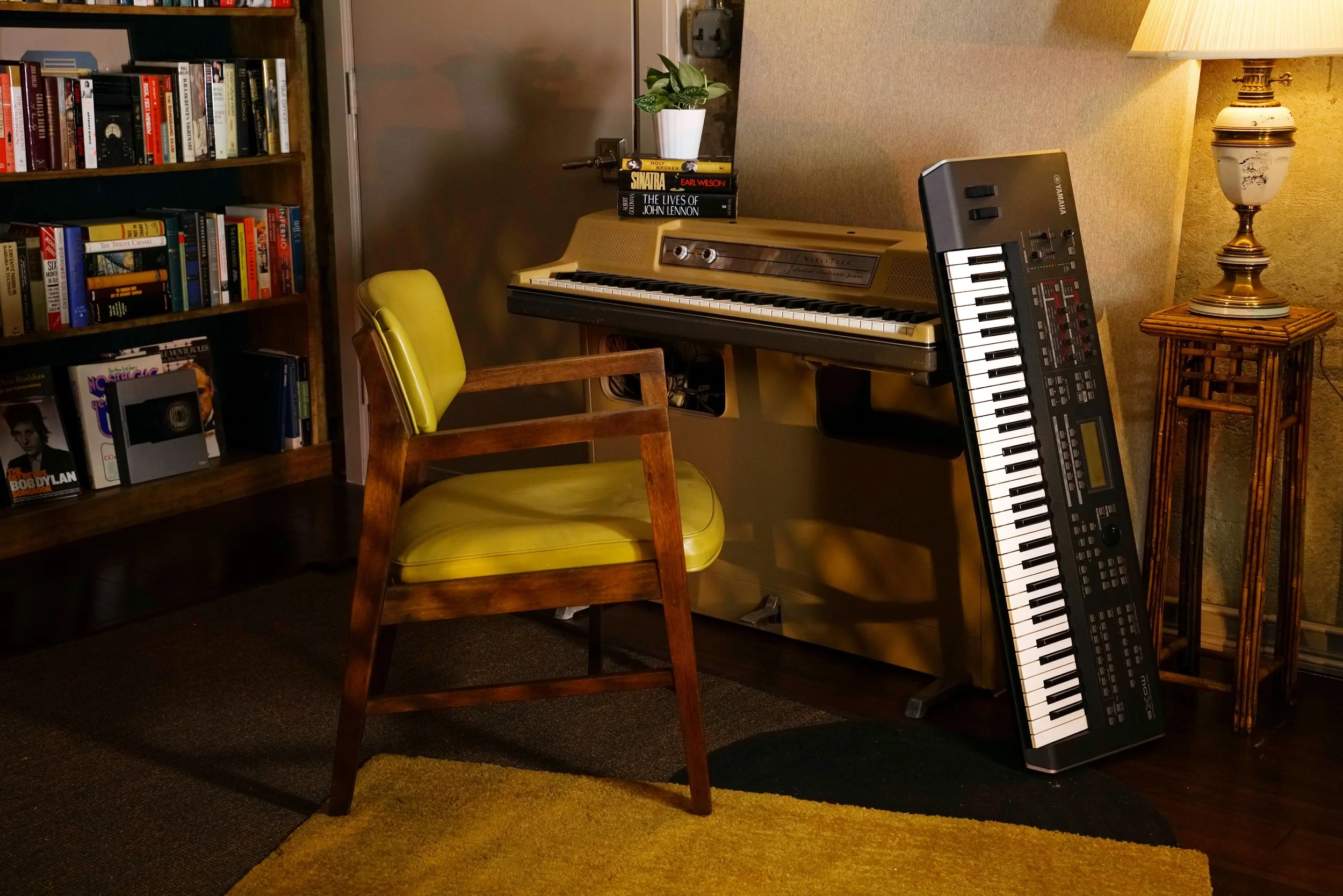
Wurlitzer electronic pianos are for everyone—you don’t need to play at a certain skill level in order to enjoy a Wurlitzer. In fact, some models of Wurlitzer were even designed to be used in the classroom, including the Wurlitzer 207A, which had an illuminated display that allowed students to see which keys were being pressed and their corresponding positions in musical notation.
All Wurlitzer electronic pianos are a great instruments, and different models have different advantages. However, if you’re a beginner, a Wurlitzer 200 or 200A in excellent mechanical condition is probably your best choice.
If you’re a beginner, your Wurlitzer should be in excellent condition
If you are a beginner piano player, you should choose a Wurlitzer in good-to-excellent condition. It should also probably be a 200 or a 200A, because they are closest to the feel of an acoustic piano. The mechanical action of a 200-series keyboard is based on an upright piano action, and it can be regulated for a high level of touch-responsiveness. As cool as they are, earlier models such as the 112 and 120 have a less sophisticated action that is harder to play.
A 140-series Wurlitzer is also a good option, because they have a very similar mechanical actions to the 200/200A. However, 140-series keyboards are older and tend to be found in worse condition. This doesn’t mean that they can’t be restored to excellent playability, but it does mean that you should purchase them more strategically.
Note the communications module that the teacher is holding. If you have one, let us know!
This advice may sound paradoxical. Some beginners think that they don't "deserve" a nice instrument until they graduate to some intermediate or advanced skill level. In the meantime (so the theory says), they should practice on a mediocre keyboard. In fact, this belief is counterproductive and it will stunt your abilities.
Beginners actually get the most benefit using a piano that plays well. Without the experience to know what a piano should feel like, it is very easy to develop bad habits. Plus, a piano that is so cool that it makes you sound slightly better than you really are improves morale and encourages practice. Wurlitzer knew this; that's why so many of their home organs included features (like Chord Magic and Pedal Sustain) that were intended to help novice players sound like a better musicians.
Some people consider a Wurlitzer a frivolous luxury for beginners. However, if classic Wurlitzer tone is what motivates you to play, go for it. There is no need whatsoever to spend any time playing a digital piano if you don't want to. (Or, if you do want to, get one of each. Get two of each! Life is short.)
Plus, Wurlitzer went to great lengths to place electronic pianos in classrooms. From the beginning, Wurlitzers were purpose-built for learning on. If you want to be strict about it, tape off your 200/200A vibrato knob until you can play your beginner repertoire with fluency.
Pro tip: try a little reverb
Here is a little trick developed by people who love playing more than they like practicing. (No shade!! Music is supposed to be fun.) It’s one of the first things a guitarist learns, but it’s somewhat more esoteric to new keyboard players, since keyboard is less likely to use effects pedals. But, basically: use effects like reverb to blur mistakes and sound better playing.
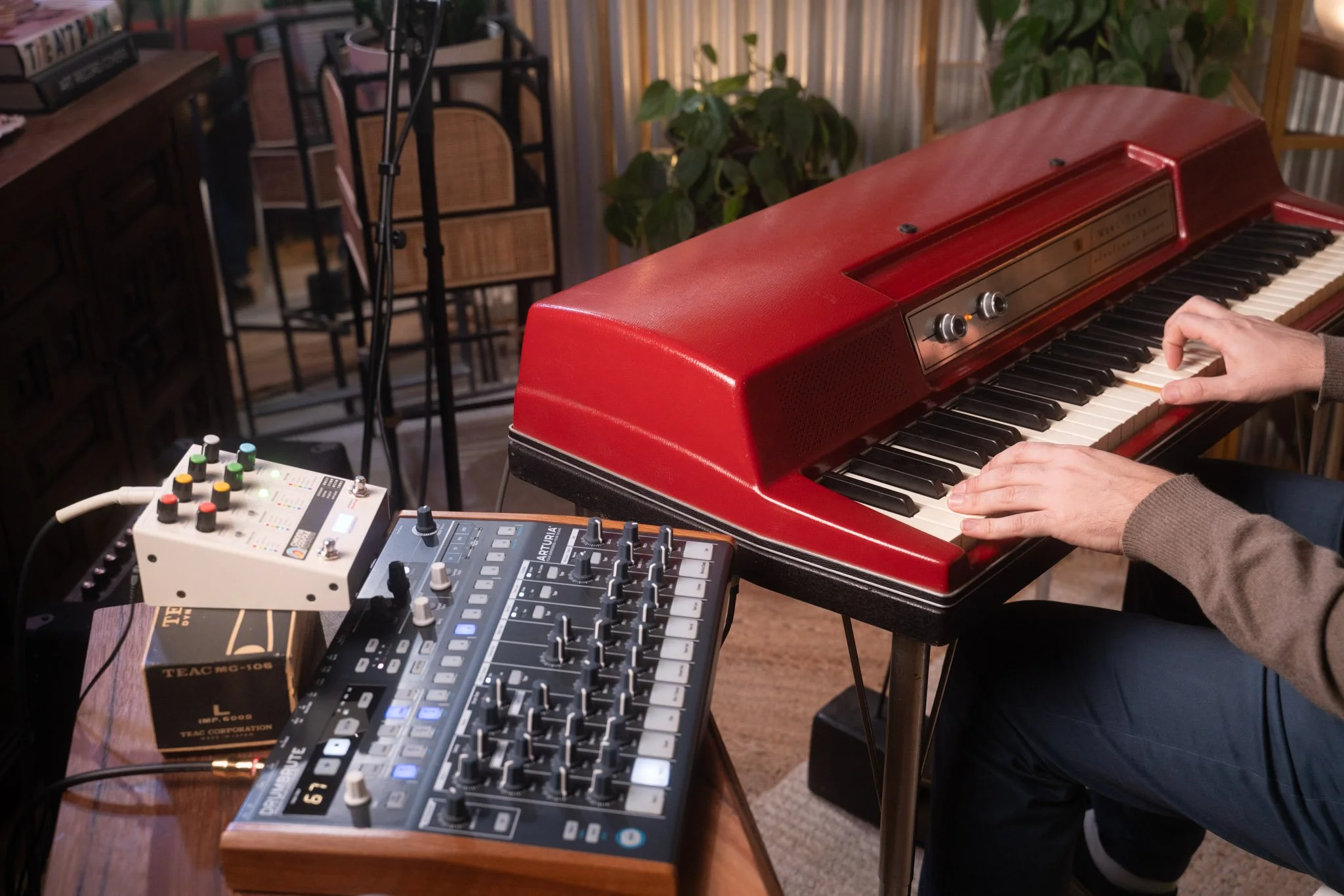
It’s fun to connect an effects pedal to the output of a Wurlitzer 200.
Obviously, you shouldn’t use effects during focused practice, and this isn’t going to fool anyone with a good ear. But it’s not really for fooling people. It’s to help you enjoy the sound that you’re making so that you can get into that flow state and keep making it. The fact is that the more playing time you clock in, the better you get. And just because you can’t play in every key available doesn’t mean that you can’t get creative and start developing your musical style.
If you want to use pedals, certain models of Wurlitzer are better than others. Just about any 200-series model has an aux output, allowing you to insert a pedal between the Wurlitzer aux out and the instrument input of your external amplifier. In this case, you’ll hear the effect in your amplifier’s speakers, but not in the onboard Wurlitzer speakers. That’s okay; just bring the amp close to you and turn it up.
Alternatively, the original amplifiers of the Wurlitzer 112 and the 200A can be modified to support an effects loop. An effects loop inserts the effect into the middle of the amplifier’s signal path, so that you will hear it from the speaker output. Certain other models, such as the 720, have the space for a custom amplifier that will include an aux output.
Can experienced players get away with a Wurlitzer in poor condition?
Intermediate and advanced players can compensate for deficiencies in the feel of the keyboard as they play. (This is one reason why Ray Charles' performance of What'd I Say is so impressive. Unless you really keep up with maintenance, the mechanical build of a Wurlitzer 120 can feel similar to a Jenga tower in free-fall.) Of course, it is a lot more fun to play a Wurlitzer that has been restored to near-perfect condition. But an experienced player can consider what touch-responsiveness and tone is required for their specific setup. Becoming familiar with a keyboard's quirks can substitute for perfectly consistent mechanical condition.
Further reading
A Brief History of Student-Model Wurlitzer Electronic Pianos
See drawings for the 830 monitor in the Tropical Fish Archive
See Key / Note Visualizer drawings in the Tropical Fish Archive