

What Should Come With a Fender Rhodes Stage Piano: A List
Fender Rhodes keyboards came with quite a few parts and accessories, many of which are subtle and easy to lose. If you’re unfamiliar with the Rhodes, it can be hard to tell if a keyboard you’re thinking about buying is complete or not.

In Restoration: Removing Duct Tape from the Wurlitzer 140a
This Wurlitzer 140a belonged to a producer for many years, and arrived at our shop in well-used condition. By that, we mean that it was pretty banged up and showed evidence of previous repairs. Also, because multiple latches were missing, the lid didn’t attach very well. At some point, it had obviously once been held in place with duct tape.

In Restoration: Mediterranean Optigan
We received a pair of two optigans!
We’ve been interested in optigans for a while, but we never tried to acquire one because their maze-like construction makes them notoriously hard to service. Also, we don’t really do motors around here. But the opportunity arose to pick up two, so here we are.

How Does a Wurlitzer Electronic Piano Work?
All Wurlitzer electronic pianos - from the model 112 to the Wurlitzer 200a - are more or less built the same. There are subtle differences in the mechanical action and the amplifier, but they all follow the same basic principles.
When you hit a key on the Wurlitzer electronic piano, a felt-tipped hammer rises and strikes a metal reed. The reed vibrates to a certain pitch, which is determined by the weight of a lump of solder at the end of the reed. A pickup converts the vibration into an electrical signal, which is finally amplified by the onboard amp and sent to a speaker.
Here’s how it works in a little more detail:
How to Convert a Wurlitzer 206 into a Wurlitzer 200
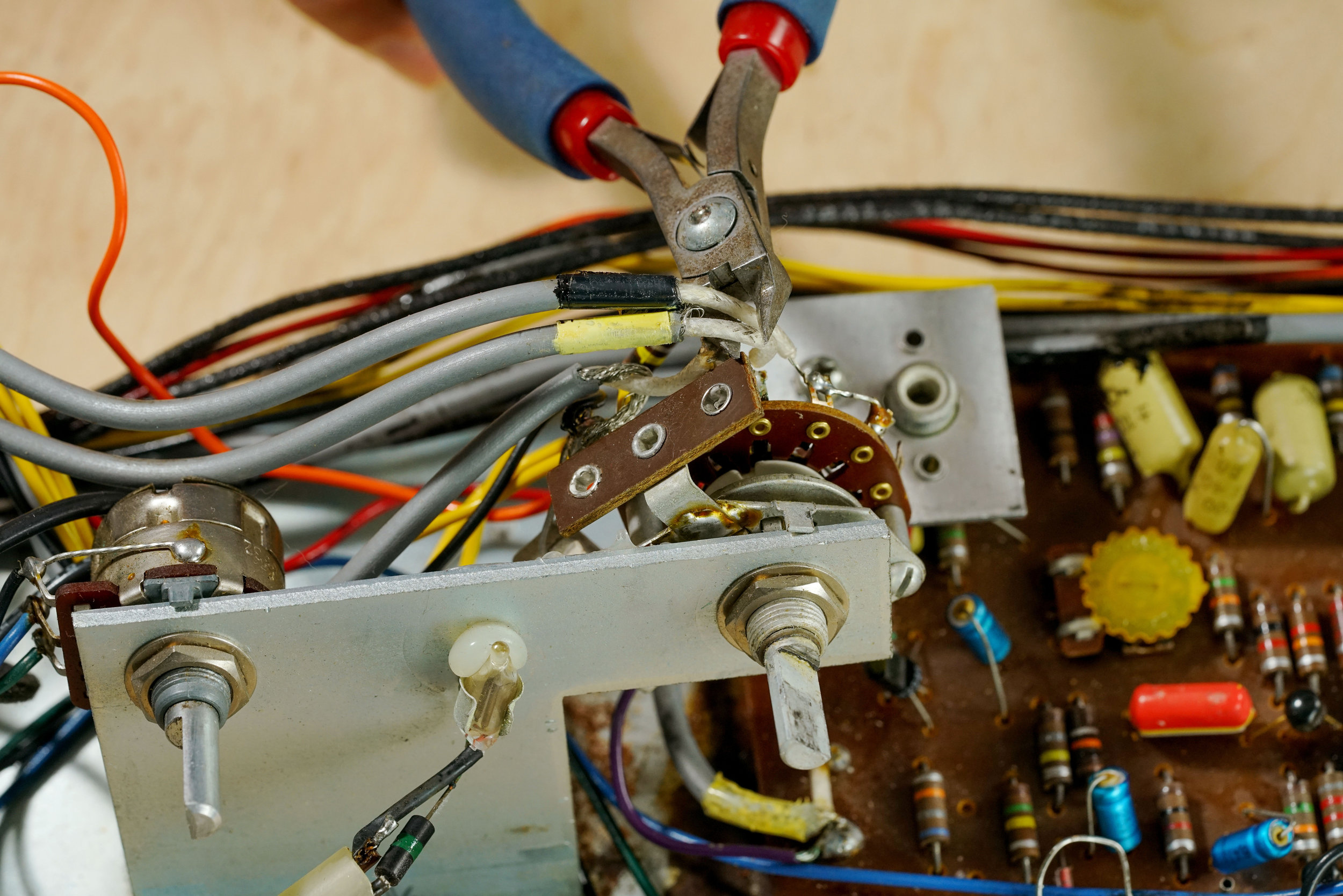
The Wurlitzer 206 is the student version of the Wurlitzer 200. It is equivalent to the 200 in every day, but it is mounted on a cabinet instead of legs and some features of the amplifier are disabled. However, all of the components that are in a 200 are also present on the circuit board of the 206. Enabling vibrato and the aux output is therefore as simple as adding some wires and a 10k potentiometer. Here is how we do it.

What is the Difference Between a Wurlitzer 200 and a Wurlitzer 200a?
The Wurlitzer 200 and 200a are extremely similar. If you are trying to decide between the two models, you should first of all realize that there are no bad decisions here. When restored, both types of keyboard are equally reliable, high-quality instruments. And, of course, both of them have that iconic Wurlitzer sound.
If you can’t decide between a Wurlitzer 200 and a 200a, this guide may help. Below, we’ve listed the differences between the 200 and the 200a.
Gibson GA-5 vs Fender 5F1: Circuit Analysis
We’ve written about the history of the Gibson GA-5 before. Basically, the GA-5 was Gibson’s first practice amp offering. Not only was the circuit nearly identical to the Fender Champ, but the GA-5’s cabinet was suspiciously similar as well. Eventually, Gibson adopted a more original exterior design, but the circuit remained pretty much the same. This means that a GA-5 of any vintage is an extremely affordable equivalent to a 5F1 Champ.
How to Convert a Gibson GA-5 to a Fender 5F1 (Or Vice Versa)
We’ve discussed the differences between the GA-5 and 5F1, both historically and in terms of the circuit. Here’s how one circuit could be converted to the other, in list form.
On Wurlitzer shielding
Because a Wurlitzer’s pickup is a source of noise, shielding is very important. If you’re missing part of your Wurlitzer’s shielding system, sourcing a replacement can be a quick way to improve your amp’s noise floor. However, sometimes its hard to tell what kind of shielding your Wurlitzer should have, because it varies among models.

Vintage Component Spotlight: Carbon Composition Resistors
Carbon composition resistors are those brown cylindrical resistors that you’ll see in most amps made before 1970. All resistors produce Johnson (thermal) noise, a byproduct of the fact that resistors dissipate heat. However, depending in their material composition and shape, resistors may produce other types of noise as well. Carbon composition resistors produce the most noise. But is this really a bad thing? Yes and no.
Popping and Crackling Sounds in Wurlitzer Electronic Pianos: Is It the Amp, Or Is It the Reeds?
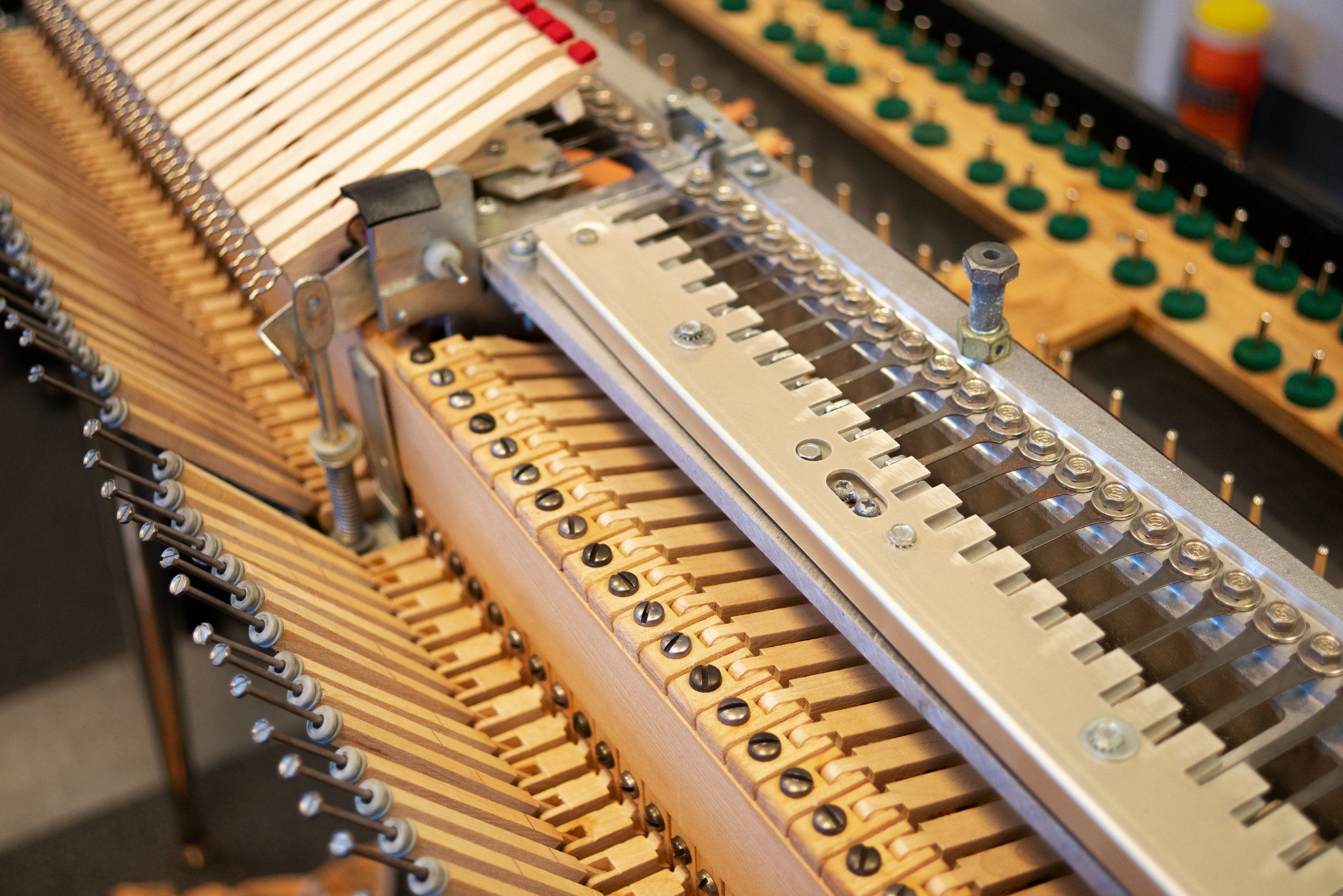
Popping and crackling sounds are a very common problem in Wurlitzer keyboards. Although they may sound dramatic, they’re most often caused by debris in the reed bar. This is very common and mostly harmless to the amplifier.
Does My Wurlitzer Need New Key Bushing Felts?
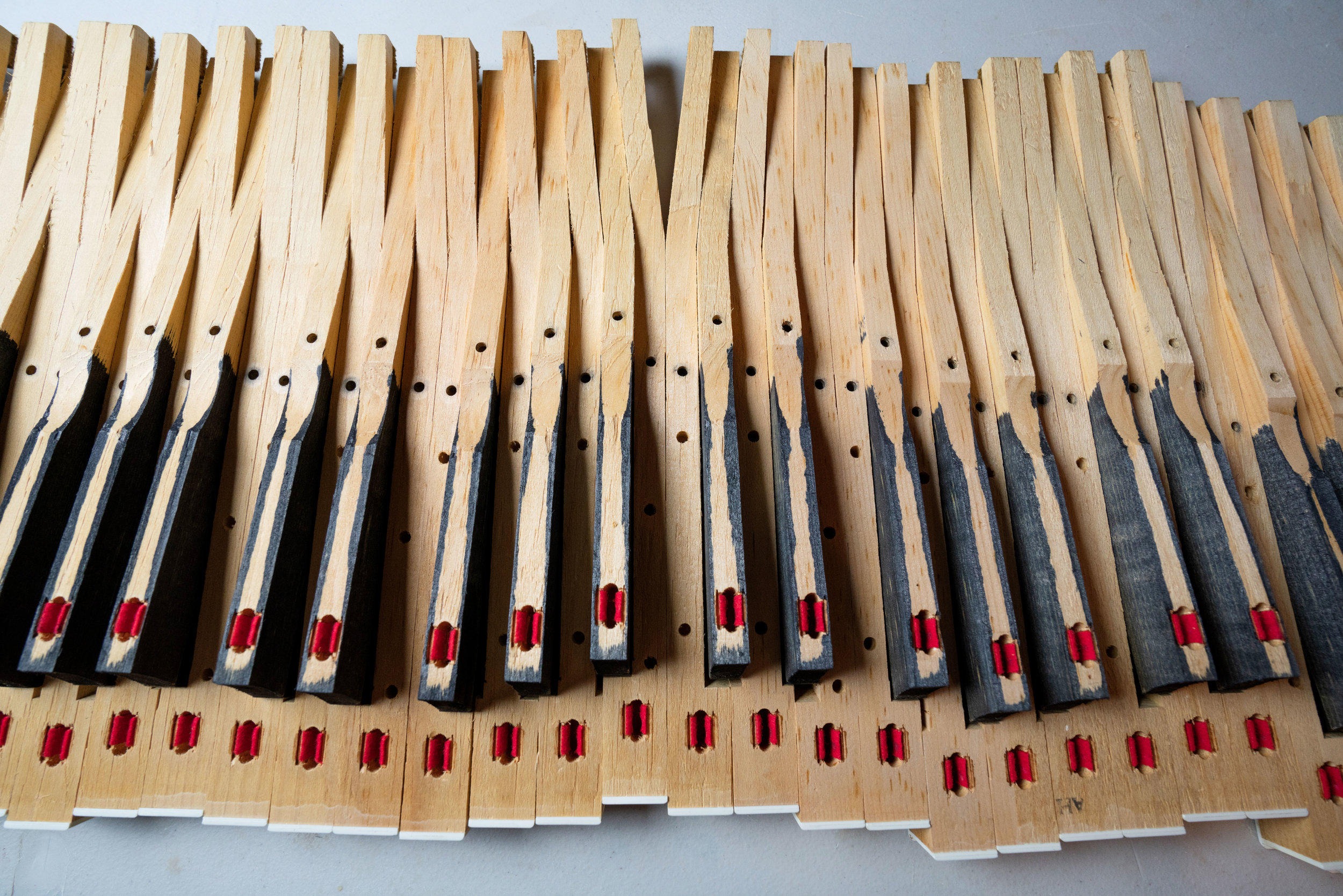
If you flip a Wurlitzer key upside down, you’ll see two holes underneath. These holes line up with the two metal pins in the keybed that guide the key’s vertical travel. They’re called the key bushings, and they’re lined with felt. As the keyboard is played, this felt becomes compressed over time and the keys no longer fit snugly around the key pin. Or, if these felts become damaged, they could prevent the key’s smooth travel and the touch-responsiveness of the keyboard becomes compromised.

Why Are My Wurlitzer's Keys Sticking?
There are many different problems that could make a Wurlitzer’s keys stick. Because sticky keys are so case-specific, there is no cure-all solution. However, here are some ideas as to why your Wurlitzer’s keys are sticking.

How to Tell if Your Wurlitzer Requires Maintenance
Some vintage keyboard are in a state of total dilapidation, and will obviously need a lot of work before they can be played. But others are in better condition. They turn on, sound comes out, all or most of the keys work. Is this enough? When can servicing a keyboard that “works” make it perform much better?

From the Archives: Wurlitzer 200a
This is a classic example of a Wurlitzer 200a that we once had. We photographed it in front of a wall at the studio - actually, in the control room. (The “signal” stencil is a holdover from the building’s time as a Metro-North Railroad switching station.) The floor is very slanted so we got to use an underrated feature that all portable 200 models have: adjustable feet.
From the Archives: Wurlitzer 203
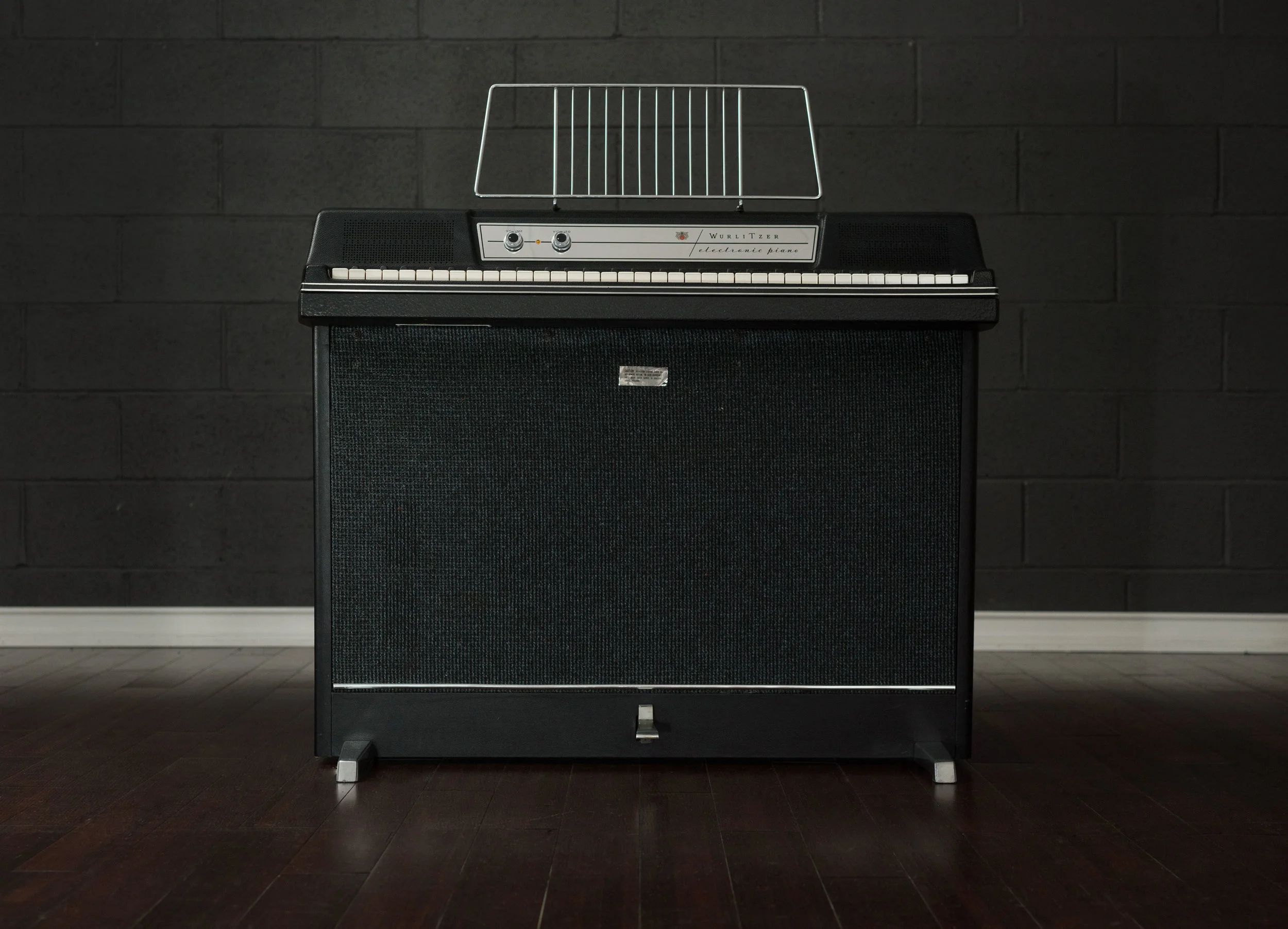
The 203 is, objectively, one of the best models of Wurlitzer ever made. It has four speakers - 8” speakers!, but still, this is as close as Wurlitzer ever got to the classic 70s stack. When you play it at high volumes, it envelops you in sound like a really nice acoustic piano. The bass response is excellent. The two front speakers are pointed at you, for monitoring purposes. The two back speakers are pointed away, for filling the room. It’s just perfection.

A Short Guide to Wurlitzer Electronic Piano Sustain Problems
The most common sustain problem on a Wurlitzer 200a (or earlier) keyboard is too much sustain: the note continues to ring out, even when the pedal is not depressed. This is almost always caused by damper felts that are excessively compressed or otherwise deteriorated. In other cases, the Wurlitzer’s sustain pedal doesn’t do anything when depressed, and the piano never has sustain. This is usually because the pedal is not making the proper interior connection. This guide will help you address both problems.

Techniques for Recording a Wurlitzer Electronic Keyboard
The Wurlitzer electronic keyboard was first commercially released by Wurlitzer in 1955 as a convenient (and potentially silent) tool to practice and study piano. But, almost immediately after its release, the instrument was discovered by professional musical talent such as Ray Charles and found its way to stages and recording studios. Because of the instrument’s unmistakably unique and warm tone and numerous practical advantages, it was a solid choice for recording artists from the very beginning.
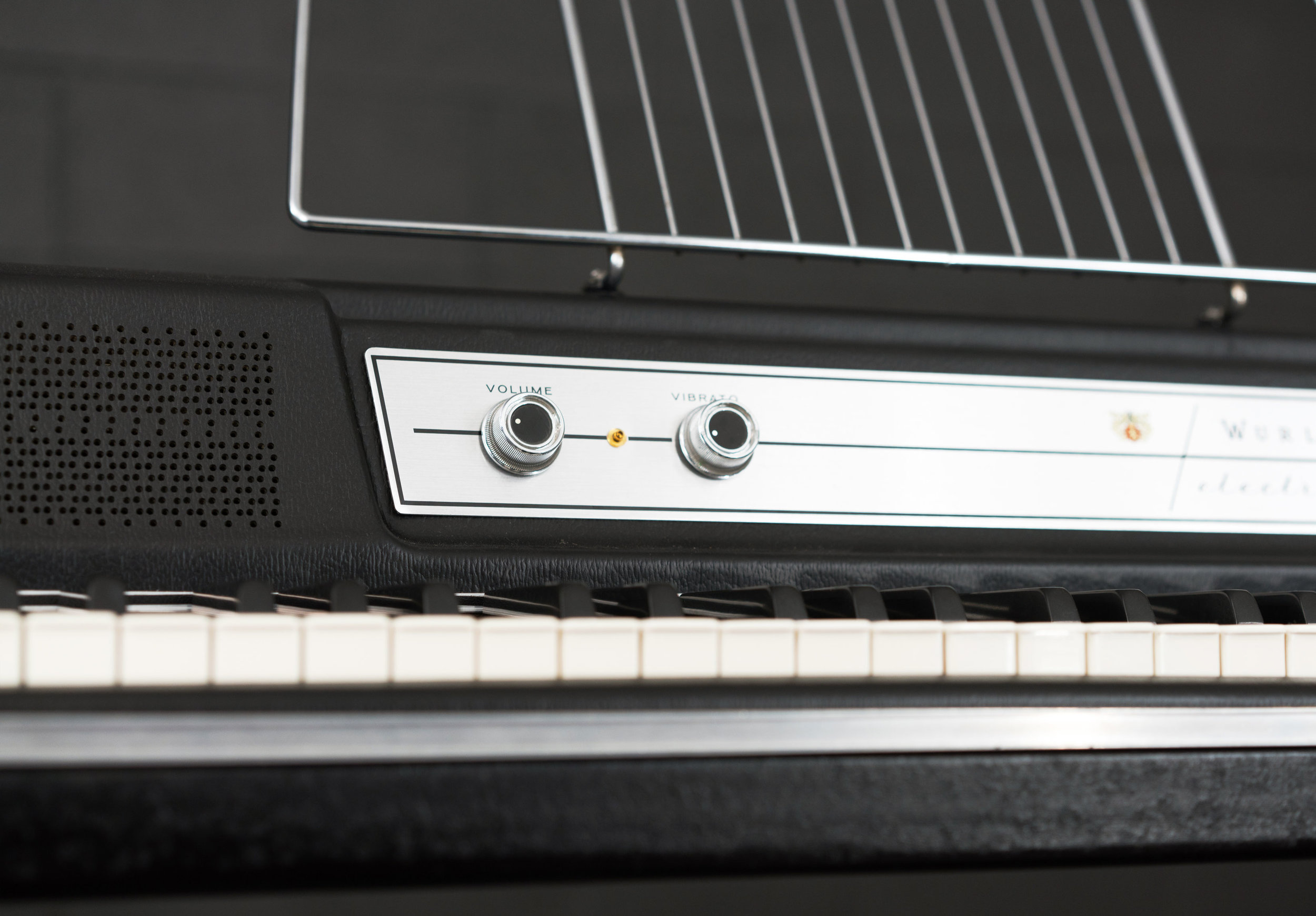
Easy Fixes for Malfunctioning Wurlitzers
Some issues involving a vintage Wurlitzer electronic piano are complex to resolve. Others are caused by loose hardware, disconnected wires, or pieces of debris. If you’d like to try some easy fixes before you call a tech, here are some steps that you can take.

Vintage Component Spotlight: Compactron Tubes
There was a time when vacuum tubes were a huge industry. Just about every time of consumer electronics required tubes, and manufacturers competed for a slice of the pie by offering greater resiliency, lower noise, longer lifespans, etc. And then cheap silicon transistors were invented.